Methylmalonic Acidemia Market SIZE AND SHARE ANALYSIS - GROWTH TRENDS AND FORECASTS (2026 - 2033)
Methylmalonic Acidemia Market is segmented By Treatment Type (Enzyme Replacement Therapy, Hematopoie...
Methylmalonic Acidemia Market Size - Analysis
The global methylmalonic acidemia market is estimated to be valued at USD 10.30 Bn in 2026 and is expected to reach USD 14.88 Bn by 2033, exhibiting a compound annual growth rate (CAGR) of 5.4% from 2026 to 2033. This substantial market expansion reflects the increasing recognition of methylmalonic acidemia as a critical metabolic disorder requiring specialized therapeutic interventions. The robust growth trajectory is primarily driven by enhanced diagnostic capabilities, rising awareness among healthcare professionals, and significant investments in rare disease research and development initiatives across major pharmaceutical markets globally.
Market Size in USD Bn
CAGR5.4%
| Study Period | 2026 - 2033 |
| Base Year of Estimation | 2025 |
| CAGR | 5.4% |
| Market Concentration | Medium |
| Major Players | Amicus Therapeutics, Regenxbio, Sobi, Sanofi Genzyme, BioMarin Pharmaceutical and Among Others |

please let us know !
Methylmalonic Acidemia Market Trends
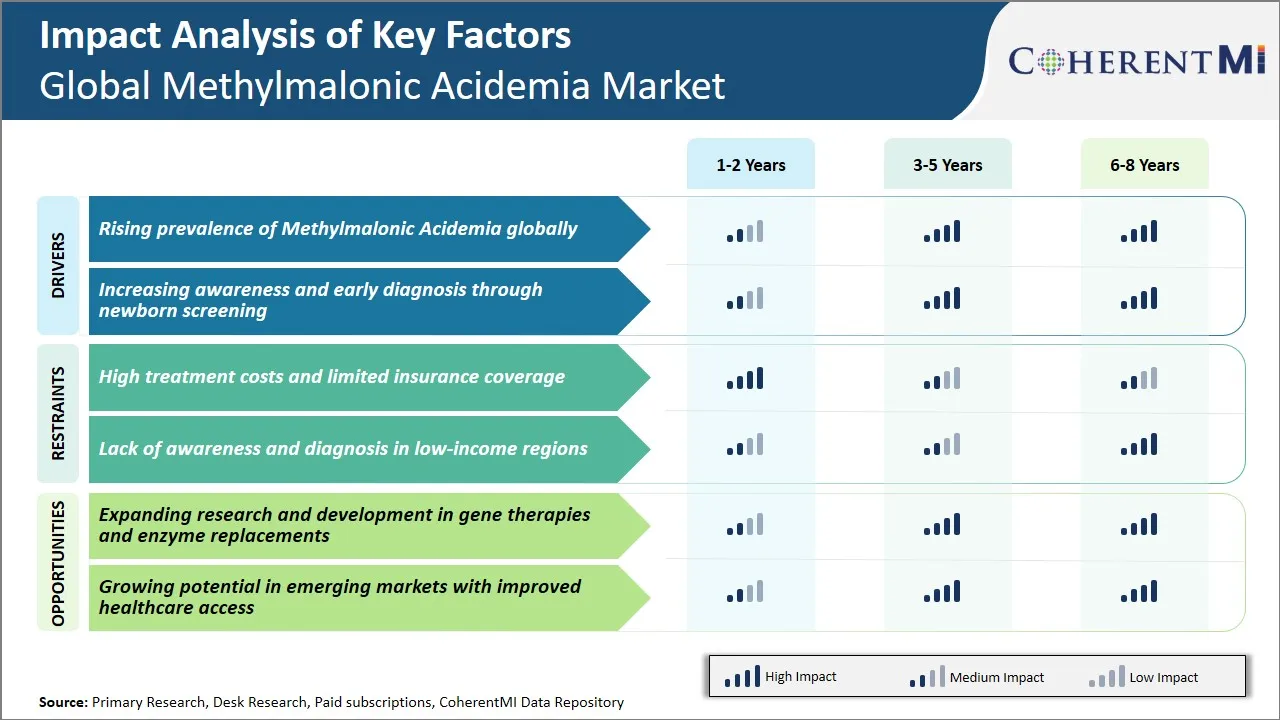
Market Driver - Rising Prevalence of Methylmalonic Acidemia Globally
The global healthcare environment is experiencing an alarming pattern of rising incidence of methylmalonic acidemia, a rare but severe hereditary metabolic disorder that essentially interferes with the normal metabolism of some amino acids and fatty acids. Being a genetic disorder, where the deficiency or dysfunction of the enzyme methylmalonyl-CoA mutase or its cofactor adenosylcobalamin was detected, this condition has been gradually receiving more and more attention by medical practitioners and pharmaceutical firms in various regions of the world, as it continues to increase its grounds in different populations. The increased rates of incidence can be explained by a set of intertwined factors that together cause both real increases in the occurrence rates and better diagnostic abilities that disclose some unknown cases.
For instance- Italian biotech Genesipre announced that its gene therapy candidate GENE202 for methylmalonic acidemia (MMA) has been granted Orphan Drug Designation by both the U.S. FDA and the European Commission. The designation acknowledges the therapy’s potential to treat this severe pediatric metabolic disorder with no currently approved treatments and provides regulatory incentives such as market exclusivity, fee waivers, and development support.
(Source - https://sofinnovapartners.com/news)
Market Driver - Increasing Awareness and Early Diagnosis through Newborn Screening
The paradigm shift of newborn screening programs around the globe has transformed the prevention of methylmalonic acidemia using preventive healthcare and early intervention modalities. These multi-screening programs have since progressed to be more complex, multi-level diagnostic screening programs that are capable of diagnosing dozens of rare metabolic disorders in the first few days of life.
The addition of methylmalonic acidemia to these screening guidelines has not only significantly benefited patient outcomes but also increased the number of patients who were diagnosed and provided an opportunity to produce long-term demand of therapeutic interventions and long-term care management solutions. Several years back, the field of newborn screening has advanced to the current stage of the tandem mass spectrometry technology that enables the healthcare provider to detect an increase in the levels of methylmalonic acid and propionyl carnitine in the dried blood spot samples of the newborn.
 To learn more about this report, Request Free Sample Copy
Market Challenge - High Treatment Costs and Limited Insurance Coverage
The high cost of treatment and limited insurance cover are the key obstacles to the global methylmalonic acidemia market, providing patients and healthcare systems with significant access challenges worldwide. Existing treatment therapies, such as special medical diets, vitamin B12 supplements, liver transplant, and novel gene therapies, are of premium prices because they are orphan drugs and have low patient numbers.
Market Opportunity - Expanding Research and Development in Gene Therapies and Enzyme Replacements
The potential in the global methylmalonic acidemia market is high based on the growing research and development efforts on novel forms of gene therapy and enzyme replacement therapy, which is a paradigm shift in regard to the treatment of AM diseases instead of the symptomatic management of the disease. The more recent developments of adeno-associated virus (AAV)-based forms of gene therapies have seen promising results in clinical trials and has the potential of providing a cure that would be one-time and would help correct the underlying genetic defects that cause MMA.
Major pharmaceutical firms and biotechnology companies are pouring money in the development of next-generation enzyme replacement therapies that may offer better and more convenient treatment modalities than the existing standard care protocols. The development of CRISPR-Cas9 gene editing platforms specifically designed to treat metabolic disorders has provided novel opportunities in treatment, and multiple companies are beginning preclinical trials to apply MMA.
For instance, in June 2024, Moderna’s mRNA‑3705, an mRNA therapy targeting MMA through MUT‑encoding mRNA delivery, was selected for the FDA's START pilot program to accelerate rare disease gene therapy development. The therapy has orphan, rare pediatric, and fast track designations and is currently in a Phase I/II study.
(Source - https://www.biospace.com/moderna-s-mrna-candidate-joins-fda-s-accelerator-program-for-rare-diseases)
Segmental Analysis of Methylmalonic Acidemia Market
 To learn more about this report, Request Free Sample Copy
Insights, By Treatment Type: Advanced Therapeutic Efficacy Drives Enzyme Replacement Therapy Dominance
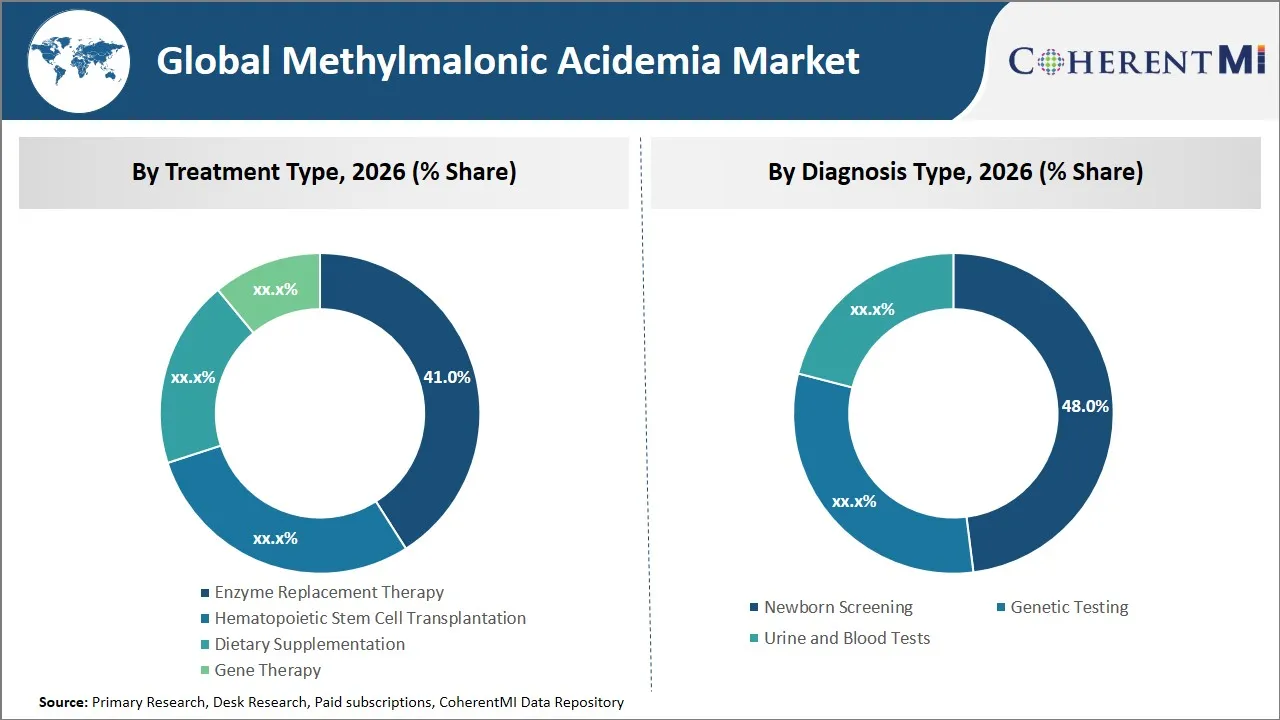
By treatment type, enzyme replacement therapy takes the largest portion of the market with an estimated share of 41% in 2026, owing to its superior clinical efficacy and established therapeutic protocols for managing methylmalonic acidemia. The treatment modality is used to treat the underlying enzymatic deficiency characteristic of the condition and the patients have access to functional enzymes that they do not generate properly.
Enzyme replacement therapy dominance is based on its popularity in directing the metabolic pathway malfunction, and providing more immediate and quantifiable benefits in patient outcomes than other treatment modalities.
For instance, preclinical studies have demonstrated that delivering hMUT mRNA via lipid nanoparticles (LNPs) is a promising approach for treating methylmalonic acidemia (MMA), a rare metabolic disorder caused by deficiency in the methylmalonyl-CoA mutase (MUT) enzyme.
(Source- https://pmc.ncbi.nlm.nih.gov/articles/PMC6642332/)
Insights, By Diagnosis Type: Early Detection Mandates Establish Newborn Screening as Primary Diagnostic Approach
By diagnosis type, newborn screening takes the largest portion of the market with an estimated share of 48% in 2026, owing to widespread implementation of mandatory screening programs and the critical importance of early intervention in methylmalonic acidemia management. The public health programs in developed countries have set up elaborate newborn screening programs which involve screening of both newborns with respect to rare metabolic diseases bearing in mind that early diagnosis is effectively known to enhance the prognosis of patients and also minimizes the costs of health care provision in the long run.
These screening programs can be considered a systemic method of diagnosis of affected infants even before they show any symptoms, which allows timely treatment of them at the most critical stage of development. Medical policy frameworks have also required larger newborn screening panels to include the testing of methylmalonic acidemia due to the development of tandem mass spectrometry technology which has made it possible to detect multiple metabolic diseases based on a single blood sample.
For instance, newborn screening for Methylmalonic Acidemia (MMA) utilizes tandem mass spectrometry on dried blood spots to measure elevated propionylcarnitine (C3) and increased C3/C2 ratios, enabling pre-symptomatic detection. Early identification allows for rapid intervention, which is crucial for reducing risks of severe metabolic crises, long-term neurodevelopmental complications, and mortality.
(Source - https://pmc.ncbi.nlm.nih.gov/articles)
Impact of Diagnostic Adoption and Newborn Screening on the Methylmalonic Acidemia Market
- Newborn screening programs have been adopted to detect metabolic disorders such as Methylmalonic Acidemia (MMA) which has greatly increased the level of early diagnosis and treatment. MMA can be identified at an early stage during the screening process, and timely interventions such as dietary control and taking vitamin supplements can eliminate the possibility of serious complications. The growing use of screening initiatives in regions across the world more so the developed areas is guiding this rise in awareness and enhancing patient outcome in the methylmalonic acidemia market.
- With the increased application of genetic testing and biomarkers in diagnosing MMA, it complements the ability to have specific and customized treatment plans. Not only do newborn screening programs leave the chances of long-term neurological harm to a minimum, but new treatment possibilities, such as enzyme replacement therapies and gene therapies also become available. This trend of improved and earlier diagnostic procedures is improving the efficacy of treatments and creating a new market of sophisticated treatment in MMA.
Innovations and Advancements in the Methylmalonic Acidemia Therapeutic Pipeline
- The therapeutic pipeline in the Methylmalonic Acidemia (MMA) market is advancing with innovative approaches, including Moderna's mRNA‑3705, a gene therapy in Phase I/II trials. This mRNA therapeutic introduces the MUT instructions of the enzyme, which is a potential new anti-MMA therapeutic agent. There are also other early-stage therapies including small molecule metabolisms modulators and gene therapies that are diversifying the pipeline and are seeking disease modifying effects.
- These innovations herald a transition between supportive care and curative therapy, and have made a great breakthrough in preclinical and clinical development. Gene therapy, small molecules and correction of metabolic pathways have given hope to ground breaking changes in treatment of MMA and the long-term patient outcomes.
Additional Insights of Methylmalonic Acidemia Market
- By treatment type, enzyme replacement therapy is expected to hold the largest market share at 41% in 2026.
- In terms of diagnosis type, newborn screening is expected to account for the highest share at 48% in 2026.
- Based on end user, the hospitals segment leads the market with an estimated share of 47% in 2026.
- North America is expected to lead the market, holding a share of 36% in 2026. Asia Pacific is anticipated to be the fastest-growing region, with 29% share in 2026.
Competitive overview of Methylmalonic Acidemia Market
The major players operating in the global methylmalonic acidemia market include Amicus Therapeutics, Regenxbio, Sobi, Sanofi Genzyme, BioMarin Pharmaceutical, AbbVie, Eli Lilly and Company, Vertex Pharmaceuticals, Shire Pharmaceuticals, Pfizer, Takeda Pharmaceuticals, Bayer, Novartis, and Medtronic.
Methylmalonic Acidemia Market Leaders
- Amicus Therapeutics
- Regenxbio
- Sobi
- Sanofi Genzyme
- BioMarin Pharmaceutical
Recent Developments in Methylmalonic Acidemia Market
- On January 20, 2026, Italian biotech Genespire’s GENE202 gene therapy candidate for methylmalonic acidemia was granted Orphan Drug Designation by the U.S. FDA and the European Commission, enabling incentives like market exclusivity and fee waivers for this rare pediatric metabolic disorder.
- On January 14, 2026, the U.S. FDA approved the first treatment for a fatal pediatric metabolic disease referenced broader rare disease therapy approvals, underscoring regulatory momentum relevant to methylmalonic acidemia therapeutics.
- In May 2025, at the American Society of Gene & Cell Therapy annual meeting, experts highlighted emerging gene and cell therapies transforming treatment approaches for metabolic diseases including methylmalonic acidemia.
Methylmalonic Acidemia Market Segmentation
- By Treatment Type
- Enzyme Replacement Therapy
- Hematopoietic Stem Cell Transplantation
- Dietary Supplementation
- Gene Therapy
- By Diagnosis Type
- Newborn Screening
- Genetic Testing
- Urine and Blood Tests
- By End User
- Hospitals
- Diagnostic Laboratories
- Homecare Settings

Would you like to explore the option of buying individual sections of this report?
Ghanshyam Shrivastava - With over 20 years of experience in the management consulting and research, Ghanshyam Shrivastava serves as a Principal Consultant, bringing extensive expertise in biologics and biosimilars. His primary expertise lies in areas such as market entry and expansion strategy, competitive intelligence, and strategic transformation across diversified portfolio of various drugs used for different therapeutic category and APIs. He excels at identifying key challenges faced by clients and providing robust solutions to enhance their strategic decision-making capabilities. His comprehensive understanding of the market ensures valuable contributions to research reports and business decisions.
Ghanshyam is a sought-after speaker at industry conferences and contributes to various publications on pharma industry.