Second Hand Apparel Market SIZE AND SHARE ANALYSIS - GROWTH TRENDS AND FORECASTS (2026 - 2033)
Second Hand Apparel Market is segmented By Product Type (Dresses and Tops, Shirts and T-shirts, Swea...
Second Hand Apparel Market Size - Analysis
The global second hand apparel market is estimated to be valued at USD 52.56 Bn in 2026 and is expected to reach USD 114.03 Bn by 2033, exhibiting a compound annual growth rate (CAGR) of 11.7% from 2026 to 2033. This substantial growth trajectory reflects the market's robust expansion potential, driven by shifting consumer preferences toward sustainable fashion alternatives and increased acceptance of pre-owned clothing across diverse demographic segments.
Market Size in USD Bn
CAGR11.7%
| Study Period | 2026 - 2033 |
| Base Year of Estimation | 2025 |
| CAGR | 11.7% |
| Market Concentration | Medium |
| Major Players | Goodwill Industries International, Vestiaire Collective, Poshmark Inc., Depop, Mercari and Among Others |

please let us know !
Second Hand Apparel Market Trends
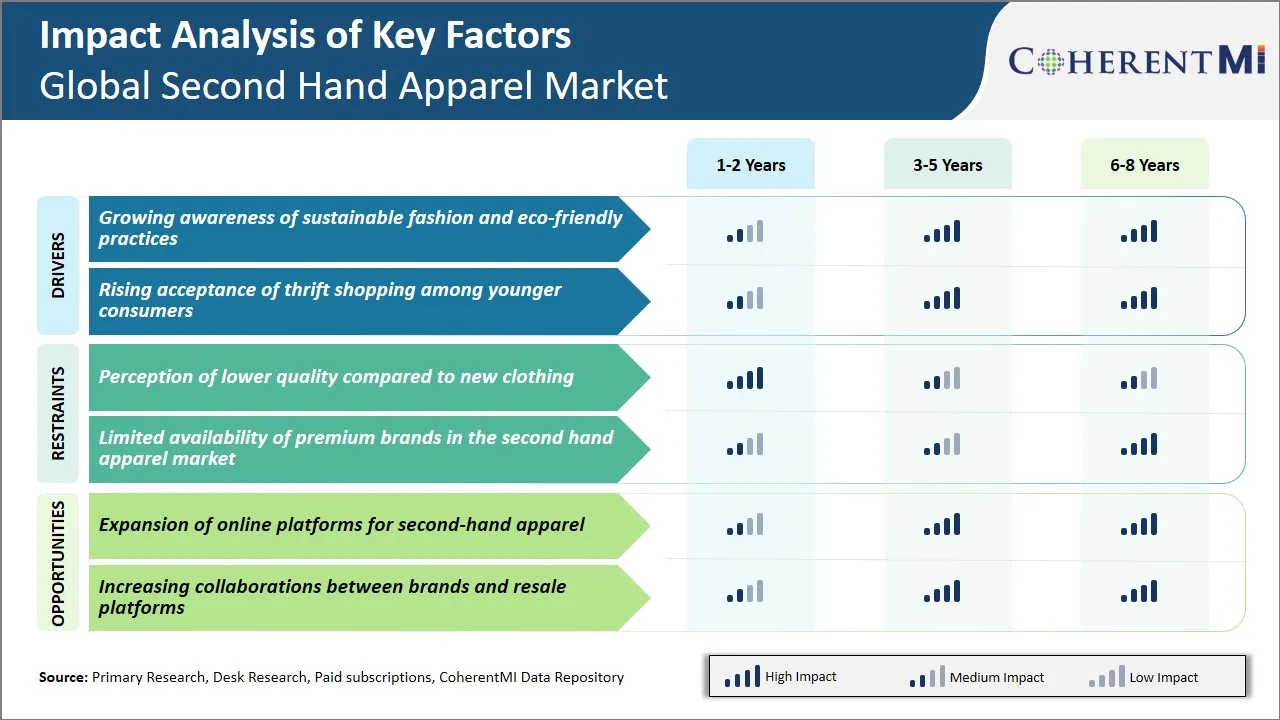
Market Driver - Growing Awareness of Sustainable Fashion and Eco-Friendly Practices
The fast fashion industry has been blamed on the effects it has to the environment and in this regard, fast fashion has been of great significance in the areas of pollution, waste generation and increased depletion of resources. But there is a paradigm shift that is taking place in the sense that consumers are more aware of how their purchasing behavior impacts on the environment, especially in the clothes industry. This increased sensitivity has become a significant force that is leading the second-hand garment industry in the world as people are on a quest to find other options that will work with their personal values and sustainability aspirations.
The environmental impact of conventional fashion production is remarkable and includes a high level of water consumption, chemical treatment, and energy-consuming production process. The production of cotton and the use of synthetic fibers is environmentally unfriendly in terms of the amounts of water and pesticides required to grow cotton, not to mention the high concentration of petroleum and carbon emissions in the production of synthetic fibers. The dyeing and finishing processes also increase these environmental issues by releasing dangerous chemicals into water systems.
Market Driver - Rising Acceptance of Thrift Shopping Among Younger Consumers
The consumer demographics of the second-hand apparel consumption has changed drastically, as younger consumers have become the core factor of the market development. The recent generations of the millennium and the generation Z, especially, have adopted the thrift shopping phenomenon with an unprecedented passion, radically changing the way of perception and social standing of wearing used clothing. This change in generation is a major difference than the earlier perceptions about second hand products and has given the market a strong platform to continue growing.
The younger generation of consumers has a vastly different attitude towards thrift shopping than that of the previous generation since these people no longer see it as something they have to do due to lack of finances, but as a lifestyle which shapes their values and decision-making taste. To most millennials and Gen Z consumers, thrift shopping has become the synonym of creativity, individuality, and authenticity.
 To learn more about this report, Request Free Sample Copy
Market Challenge - Perception of Lower Quality Compared to New Clothing
The second-hand apparel market in the world has a big challenge of breaking the long-held attitudes of consumers towards the quality and desirability of the product. Although there is an increasing trend in the sustainability movement, a large portion of consumers still links used clothes to low quality, old fashions, and possible hygiene issues. This image roadblock is more noticeable in the emerging markets where the buying of new clothes is somehow regarded as a symbol of status and economic success. Based on the surveys conducted with consumers, it is seen that only about 40% of possible consumers are still reluctant to buy used apparel because of the doubts about its longevity, hygiene, and genuineness of branded products.
Market Opportunity - Expansion of Online Platforms for Second-Hand Apparel
Online transformation of the second hand clothing market is one of the most influential growth opportunities, as the online services transform the process of finding, buying, and selling second-hand clothes. The worldwide pandemic increased the pace of e-commerce and online sales of second-hand fashion are rising at a compound annual growth rate of 2,530, which is much higher than the traditional retail. The digital systems have been able to overcome traditional obstacles like inadequate inventory visibility, geographical limitations and time-consuming shopping processes which were a common experience in the brick and mortar thrift stores. The use of advanced technologies such as AI-based personalization, virtual try-on, and complex search engines are boosting the user experience and conversion rates.
Gen Z & Millennial Adoption Patterns, AI, Personalization & Tech-Enabled Discovery
|
Dataset Pointer |
Explanation |
Impact on Second Hand Apparel Market |
|
Gen Z Adoption Patterns |
Gen Z values sustainability and unique, eco-friendly fashion. |
Drives higher demand for second-hand clothing due to environmental consciousness and affordable styles. |
|
Millennial Adoption Patterns |
Millennials prefer value-for-money and thrifting as a fashion trend. |
Increases market growth, driven by both cost-effectiveness and style. |
|
AI in Personalization |
AI provides tailored shopping experiences with personalized recommendations. |
Enhances user experience and boosts sales by offering curated items. |
|
Tech-Enabled Discovery |
Technologies like AI and AR help users discover second-hand items more easily. |
Makes shopping more interactive and convenient, increasing consumer confidence in purchases. |
Key winning strategies adopted by key players of Second Hand Apparel Market
- Diversification of product: Firms are introducing more choices of second hand clothes to satisfy different consumer tastes such as luxury goods and niche market. ThredUp has also increased its curated brands such as designer brands in addition to its regular product range, which has drawn customers of a higher end.
- Growth in online platforms: E-commerce is also an essential growth platform and businesses are introducing user-friendly applications and platforms. Poshmark has also gone global with its services and is exploring Europe and Asia markets whereas Depop is consolidating its position by teaming up with fashion influencers to access younger demographics.
- Sustainability Pledge: A major emphasis will be placed on advancing the environmental provisions of second-hand shopping, which will help decrease waste levels and carbon footprints. The RealReal also focuses on sustainability as it exudes the environmental friendliness of buying second-hand luxury items, whereas ThredUp has created programs that aim to inform consumers of the environmental benefits of buying used.
Segmental Analysis of Second Hand Apparel Market
 To learn more about this report, Request Free Sample Copy
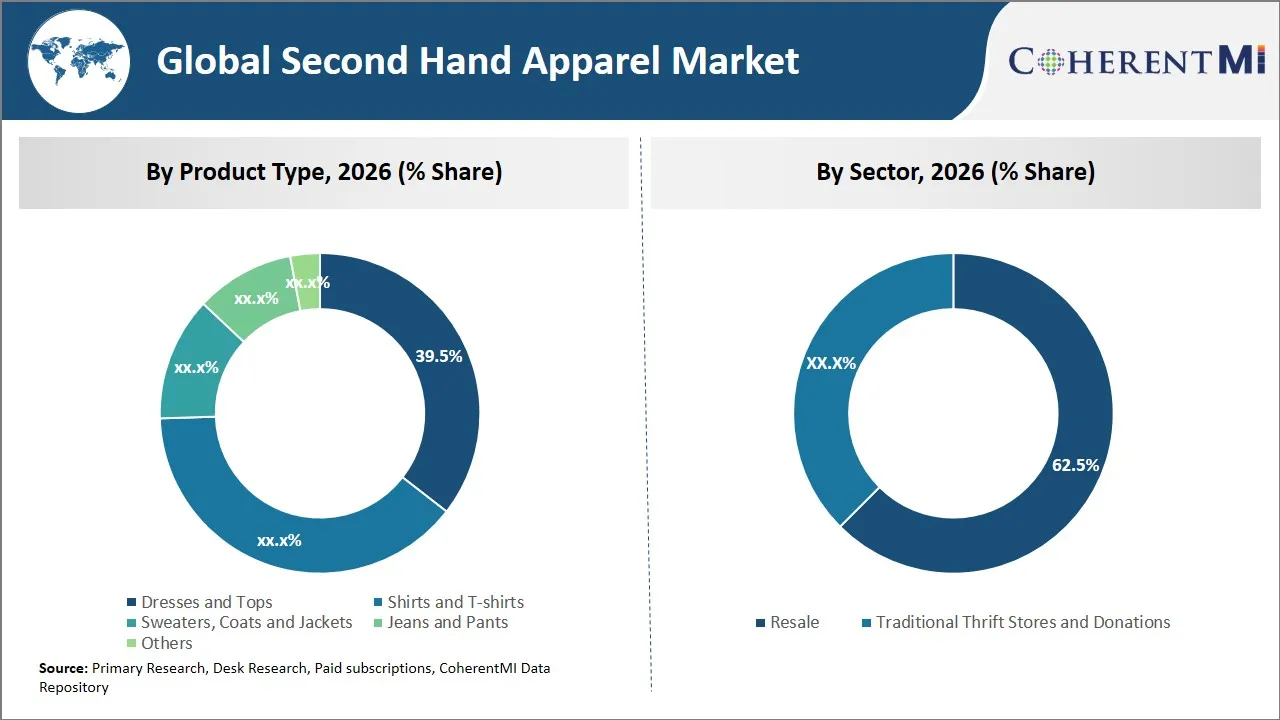
Insights, By Product Type - Dresses and Tops Segment Dominate due to Fashion Versatility and Occasion
Dresses and tops segment is expected to contribute 39.5% of the market share in 2026, owing to their inherent versatility and the diverse occasion-driven demand they fulfill in consumers' wardrobes. This market leadership division is the result of a combination of a number of factors which, because of their intertwined nature, render this group of garments specifically appealing within the second-hand clothing ecosystem.
The main factor that propels the success of dresses and tops in the second-hand market is their unusual versatility in numerous situations and settings of dressing. Dresses and tops unlike specialized apparel are wardrobe essentials that can be worn up or down; hence, are after items by cost-effective consumers who want to get the most out of their clothes. A dress can be worn in the morning and in the evening with the help of the right accessories, tops can be mixed and matched with bottoms with unlimited possibilities, which will provide a few outfits with a large number of different combinations.
Insights, By Sector - The Resale Segment Dominates due to Digital Platforms and Brand Authentication Fuel Resale Channel Growth
The resale segment is projected to contribute 62.5% of the market share in 2026, owing to the revolutionary impact of digital online trading platform and sophisticated brand authentication systems that have transformed how consumers buy and sell pre-owned apparel. The market structure and dominance of the resale channel is a paradigm shift in consumer behavior and market structure which has professionalized the second hand clothing industry.
The key to the increase of the resale segment is the innovation of digital marketplace. The online medium has removed the geographical boundaries where the sellers reach the networks with buyers around the world and also have expanded the markets by a huge margin and not only within the local communities. The platforms offer user friendly interfaces, ability to take detailed product shots and easy processes of transacting that allow selling pre-owned clothing to mainstream consumers who might have once thought the process to be too complex or time consuming to undertake. The ease of posting products at home, pricing and controlling sales on mobile applications has been democratized to join the resale economy.
Additional Insights of Second Hand Apparel Market
- North America Dominance: North America remains the dominant region in the second-hand apparel market, driven by a large consumer base increasingly focused on sustainability and the growing popularity of thrift shopping. The rise of resale platforms like Poshmark and ThredUp has further solidified this region's leadership.
- Human beings who prioritize their health and the environment drive growth because they demand eco-friendly and organic and upcycled clothing which businesses now provide. Companies promote their products to health-conscious customers who prefer items containing no dangerous substances or colorants.
- The rising demand for second-hand clothing stems from growing public knowledge about how fashion practices damage the environment because people consider second-hand clothing to be a more environmentally friendly choice. Circular fashion establishes a system where garments undergo reuse and recycling and repurposing and brands such as Rebag and The RealReal demonstrate their efforts to minimize textile waste through their business practices.
- The second-hand clothing industry uses technology to improve how customers experience its services. AI-powered applications and platforms enable users to discover their desired products with greater convenience during the buying and selling process. ThredUp and Depop continue to enhance their platforms with features like virtual try-ons and personalized recommendations to attract and retain customers.
Competitive overview of Second Hand Apparel Market
The major players operating in the global second hand apparel market include Goodwill Industries International, Vestiaire Collective, Poshmark Inc., Depop, Mercari, Buffalo Exchange, The RealReal Inc., Grailed Inc., Tradesy Inc., and Poshmark, Inc.
Second Hand Apparel Market Leaders
- Goodwill Industries International
- Vestiaire Collective
- Poshmark Inc.
- Depop
- Mercari
Recent Developments in Second Hand Apparel Market
- In March 2024, Vinted acquired Danish marketplace Trendsales to strengthen its presence in the Nordic region.
- In August 2023, Hanna Andersson and H&M launched resale systems to recycle previously owned clothes, promoting sustainability.
- In March 2024, ThredUp's Resale Report projected the global second-hand apparel market to reach USD 350 Bn by 2028.
Second Hand Apparel Market Segmentation
- By Product Type
- Dresses and Tops
- Shirts and T-shirts
- Sweaters, Coats and Jackets
- Jeans and Pants
- Others
- By Sector
- Resale
- Traditional Thrift Stores and Donations
- By Target Population
- Women
- Men
- Kids
- By Distribution Channel
- Online Retail
- Offline Retail
- Thrift Stores
- Consignment Shops
- Charity Shops

Would you like to explore the option of buying individual sections of this report?
Gautam Mahajan is a Research Consultant with 5+ years of experience in market research and consulting. He excels in analyzing market engineering, market trends, competitive landscapes, and technological developments. He specializes in both primary and secondary research, as well as strategic consulting across diverse sectors.