Adrenogenital Syndrome Market SIZE AND SHARE ANALYSIS - GROWTH TRENDS AND FORECASTS (2026 - 2033)
Adrenogenital Syndrome Market is segmented By Treatment (Hormone Replacement Therapy, Surgery, Enzym...
Adrenogenital Syndrome Market Size - Analysis
The Global Adrenogenital Syndrome Market is estimated to be valued at USD 15.60 Bn in 2026 and is expected to reach USD 23.61 Bn by 2033, exhibiting a compound annual growth rate (CAGR) of 6.1% from 2026 to 2033. Such a large market growth is attributable to rising prevalence of congenital adrenal hyperplasia disorders across the globe coupled with improved diagnostic efforts and more awareness among both health professionals and patients on the adrenogenital syndrome conditions with continued demand for special therapeutic interventions and holistic treatment solutions. Key trends include the rising adoption of enzyme replacement therapies, increased government investment in rare disease R&D, expanding healthcare infrastructure in emerging markets, and more government initiatives supporting orphan drug development.
Market Size in USD Bn
CAGR6.1%
| Study Period | 2026 - 2033 |
| Base Year of Estimation | 2025 |
| CAGR | 6.1% |
| Market Concentration | Medium |
| Major Players | Ferring Pharmaceuticals, Johnson & Johnson, Bayer AG, Pfizer Inc, Novartis and Among Others |

please let us know !
Adrenogenital Syndrome Market Trends
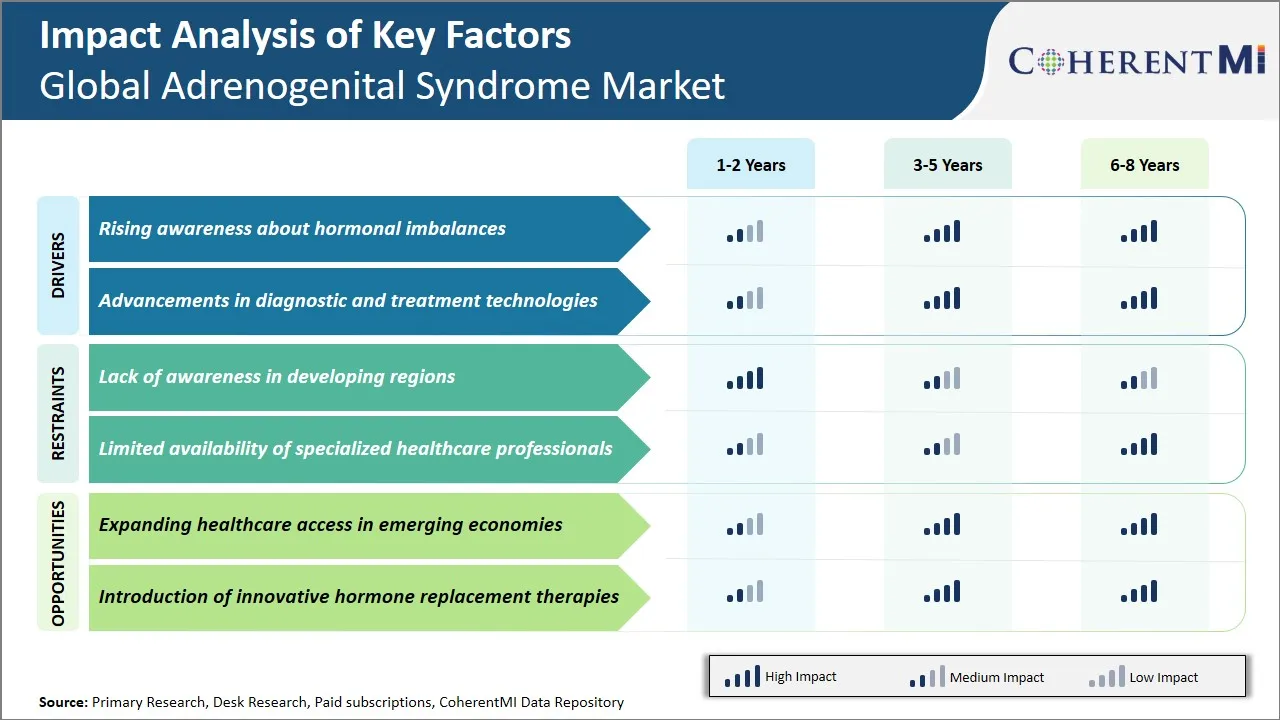
Global Adrenogenital Syndrome Market Driver - Rising Awareness about Hormonal Imbalances
The modern healthcare environment has recorded an astounding shift in the population regarding hormonal diseases, especially those that involve the endocrine and metabolic mechanisms. This increased consciousness has emerged as a turning point in the global market of adrenogenital syndrome since patients, health practitioners, and medical societies have now realized the immense effects of hormone imbalance on general health and living standards.
The increasing awareness about the adrenogenital syndrome or congenital adrenal hyperplasia has significantly changed its image as a poorly comprehended and often misunderstood condition to the present state of a crucial endocrine disease that needs to be addressed expeditiously with long-term management options. Educational efforts driven by medical associations, patient advocacy groups and medical institutions have been well-timed in spreading awareness about the intricacy of the adrenal gland dysfunction and its subsequent effects on hormone production.
For instance, in April 2025, the first‑ever World Hormone Day was observed as a global public health campaign to spotlight the vital role hormones play in overall health and wellbeing, and to educate the public on what hormones are, why they matter, and how imbalances can affect health. This initiative brought together endocrinology societies, patient groups, healthcare professionals, media, and policymakers worldwide with outreach events, educational content, and social media activities under the hashtag #BecauseHormonesMatter to increase hormone health awareness and encourage proactive health behaviors.
(Source- https://www.ese-hormones.org/news/press-release)
Global Adrenogenital Syndrome Market Driver - Advancements in Diagnostic and Treatment Technologies
Technological advancements in the diagnostic process and therapeutic interventions have radically changed the clinical management environment of adrenogenital syndrome and have now presented unprecedented opportunities of early detection, accurate diagnosis, and tailored treatment plans that greatly enhance patient outcomes and quality living.
The development of advanced laboratory testing methods such as advanced mass spectrometry-based hormone tests, genetic sequencing technology and biomarker identification systems have allowed medical professionals to both attain exceptional accuracy in the diagnosis of the different forms of congenital adrenal hyperplasia and, at the same time, be able to differentiate between the different forms of enzyme deficiencies that characterize the different subtypes of this complicated endocrine disease.
 To learn more about this report, Request Free Sample Copy
Global Adrenogenital Syndrome Market Challenge - Limited Awareness and Diagnostic Capabilities in Developing Regions
Inadequate awareness and diagnostic facilities in the developing parts of the world presents a major challenge to the global adrenogenital syndrome market and all these together constitute a considerable percentage of the world population. Medical professionals in these areas do not receive specialized education on the identification of the fine and different forms of AGS, and most are usually diagnosed with a false diagnosis or diagnosed with the conditions at a later stage. The infrequence of the syndrome, access to special endocrinologists and genetic counselors, creates a gap in knowledge, which contributes to under-diagnosis and inadequate treatment regimes. Social pressures and misconceptions also contribute to this difficulty when cultural stigmas about genetic diseases and hormonal disorders further complicate situations in which they prefer not to see a doctor or have diagnostic tests because of social pressure and wrong beliefs.
Lack of newborn screening programs in most of the developing countries implies that important early intervention chances are lost, which could lead to life threatening adrenal crises or irreversible complications. Also, there are no standardized diagnostic protocols and the number of advanced laboratory testing facilities to measure the levels of certain hormones and genetic markers is very low thus hindering accurate diagnosis.
Global Adrenogenital Syndrome Market Opportunity - Healthcare Infrastructure Expansion in Emerging Economies
The development of the medical infrastructure and availability of healthcare services in emerging economy is an attractive market in terms of growth of global adrenogenital syndrome market. Other governments in countries like India, Brazil, China, and some of the countries in the Southeast Asia region are on the move to carry out ambitious healthcare reform agendas which include large investments in medical facilities, healthcare provider development and community health campaigns.
These trends are establishing a more and more favorable setting concerning specialized medical services, such as endocrinology and genetic medicine, which finds its direct reflection in the opportunities of AGS diagnosis and treatment. The rising middle class in these areas also shows that there is greater healthcare awareness and buying power and hence demand for full-fledged medical care and advanced treatment programs.
For instance, The state health department of Rajasthan, India announced a 2026 initiative to expand delivery capacity across public health facilities, including commissioning 20 new hospitals, 12 nursing colleges, multiple critical care blocks, and expanded emergency and ICU services to enhance access and service delivery.
(Source- https://www.digitalhealthnews.com)
Segmental Analysis of Adrenogenital Syndrome Market
 To learn more about this report, Request Free Sample Copy
Insights, By Treatment - Hormone Replacement Therapy Dominates Treatment Landscape Through Comprehensive Symptom Management
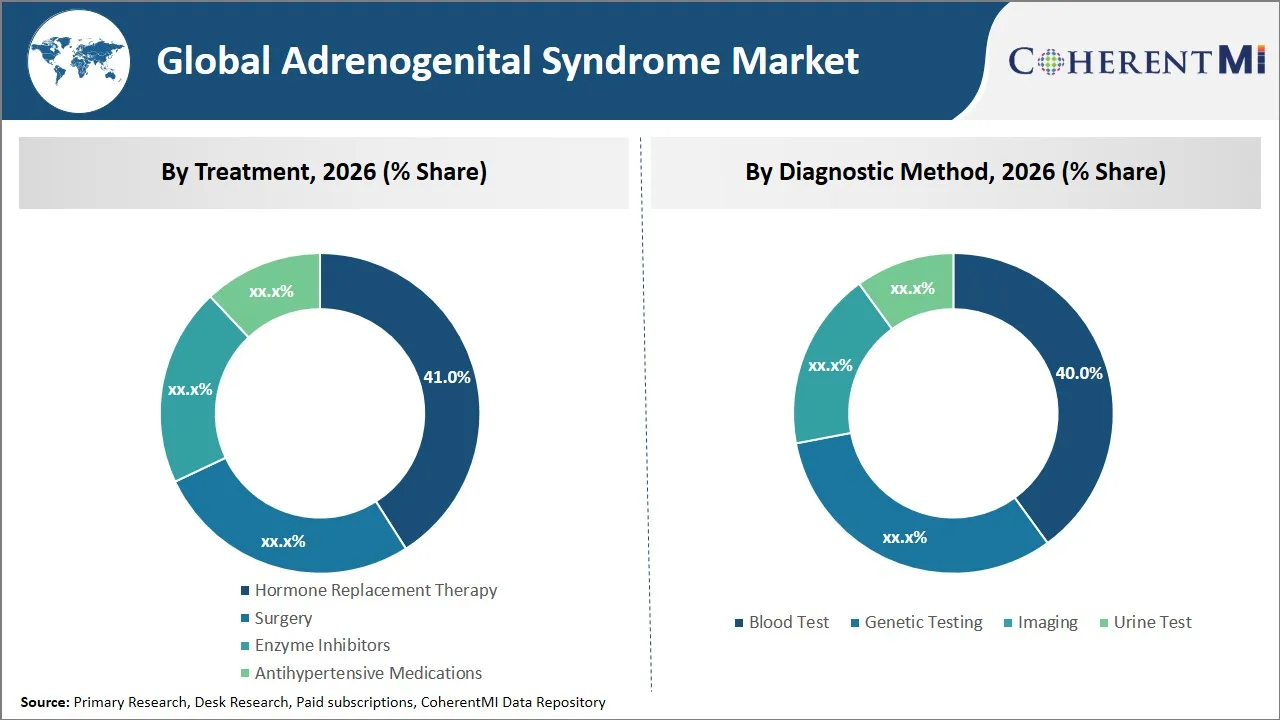
By treatment, hormone replacement therapy is expected to contribute the highest share of 41% in 2026 owing to its fundamental role as the cornerstone therapeutic approach for managing adrenogenital syndrome across all patient demographics. The dominance of hormone replacement therapy stems from its ability to address the core pathophysiological mechanism underlying adrenogenital syndrome, which involves deficiencies in cortisol and aldosterone production due to enzymatic defects in steroidogenesis pathways.
The main reason why hormone replacement therapy has become a market leader is that it is a holistic method of managing symptoms. Seeing that patients with adrenogenital syndrome also need glucocorticoid replacement in their lives to avoid life-threatening adrenal crises, this mode of treatment is not an option but an indispensable one. The treatment is able to treat various clinical manifestations concurrently which include electrolyte imbalances, hypotension, hypoglycemia, and the typical symptoms of virilization of the condition.
For instance, The U.S. Food and Drug Administration (FDA) has lifted the "black box" warnings from hormone replacement therapy (HRT) for menopause, citing new evidence that risks such as cardiovascular disease, dementia, and breast cancer are lower when therapy begins within 10 years of menopause or before age 60. This decision has generated debate among clinicians.
(Source- https://www.fda.gov/news-events/press-announcements)
Insights, By Diagnostic Method - Blood Tests Lead Diagnostic Methods Through Rapid and Accurate Hormonal Assessment
By diagnostic method, blood test takes the largest portion of the market with an estimated share of 40% in 2026, owing to its unparalleled ability to provide rapid, accurate, and comprehensive hormonal profiling essential for adrenogenital syndrome diagnosis and monitoring. The segment's dominance is primarily driven by the fundamental requirement to measure specific hormone levels and their precursors, which can only be reliably assessed through serum analysis.
The primary driver of the blood test segment is the urgent need to measure 17-hydroxyprogesterone levels, which is considered the most reliable biomarker for screening and diagnosing adrenogenital syndrome. The high levels of 17-hydroxyprogesterone are a direct indication of enzyme blockage in the cortisol production pathways and therefore blood testing is essential in the conclusive diagnosis.
Optimizing Cortisol Replacement in Adrenogenital Syndrome: Addressing Treatment Gaps and Innovations
- Cortisol replacement therapy is an important part of the management of Adrenogenital Syndrome (AGS), however, there are still enormous optimization differences in the market. Conventional forms of treatment tend to be not perfectly able to recreate the natural cortisol levels in the body, causing problems such as adrenal crisis or side effects like weight gain and osteoporosis in the long run. However, in spite of all these improvements, these therapies usually involve synthetic glucocorticoids, which fail to respond to the changing cortisol requirements on a daily basis, and also they fail to cope with the dangers of under/excessive replacement.
- Notable attempts to fill these gaps include the increased focus on more customized treatment methods in the adrenogenital syndrome market. Innovations are aimed at bio-corresponding dosing regimens in accordance to circadian rhythms, and also new drug delivery mechanisms that offer more steady cortisol concentrations throughout the day. By personalizing therapy, the use of smart delivery devices, extended-release formulations, and biomarker-guided therapies may provide improved control, less adverse effects, and improved patient outcomes.
Innovation and Pipeline Advancements in Adrenogenital Syndrome: Towards Personalized Cortisol Replacement Therapies
- Pipeline innovations are aimed at enhancing the precision and individualization of cortisol replacement therapies in the market of Adrenogenital Syndrome (AGS). Scientists are also considering the use of next-generation glucocorticoids that are more sensitive to the natural cortisol rhythms of the body to minimize some of the most common side effects of the drugs such as weight gain and osteoporosis. There is increased interest in creating extended-release formulations and bioengineered cortisol analogs which can provide more even hormone levels throughout the day, which, in turn, increases treatment efficacy and quality of life in patients.
- Innovation is also propelling development in drug delivery system like transdermal patches or implantable devices which will be used to provide continuous or controlled release of cortisol. There is also the growing trend of personalized medicine, whereby genetic profiling and dosing based on biomarkers to more closely match the particular therapeutic to the specific patient is being studied. Such innovations would have the potential to enhance the results in AGS patients having more specific, effective, and safer treatment alternatives.
Additional Insights of Adrenogenital Syndrome Market
- By treatment, hormone replacement therapy is expected to hold the largest market share at 41% in 2026.
- In terms of diagnostic method, blood test is expected to account for the highest share at 40% in 2026.
- Based on age group, the adult segment leads the market with an estimated share of 43% in 2026.
- North America is expected to lead the market, holding a share of 36% in 2026. Asia Pacific is anticipated to be the fastest-growing region, with 25% share in 2026.
Competitive overview of Adrenogenital Syndrome Market
The major players operating in the Global Adrenogenital Syndrome Market include Ferring Pharmaceuticals, Johnson & Johnson, Bayer AG, Pfizer Inc, Novartis, Merck & Co, Sanofi, Eli Lilly and Co, AbbVie, AstraZeneca, GlaxoSmithKline, Roche, Boehringer Ingelheim, Amgen, and Abbott Laboratories.
Adrenogenital Syndrome Market Leaders
- Ferring Pharmaceuticals
- Johnson & Johnson
- Bayer AG
- Pfizer Inc
- Novartis
Recent Developments in Adrenogenital Syndrome Market
- On January 22, 2026, Crinetics Pharmaceuticals has achieved significant milestones in the development of atumelnant (CRN04894), a first-in-class, once-daily oral ACTH receptor antagonist designed to treat congenital adrenal hyperplasia (CAH). Following positive Phase 2 results that demonstrated rapid, substantial, and sustained reductions in key disease biomarkers (such as androstenedione and 17-hydroxyprogesterone), the company has initiated late-stage, pivotal studies for both adults and children.
- In August 2025, the U.S. FDA granted Orphan Drug Designation to Crinetics Pharmaceuticals’ atumelnant for treating classic congenital adrenal hyperplasia (CAH), a rare, high-unmet-need genetic disorder. As the first oral, once-daily ACTH receptor antagonist for CAH, it showed up to an 80% mean reduction in androstenedione in Phase 2 trials. This designation provides incentives like tax credits, fee waivers, and seven years of market exclusivity, supporting upcoming Phase 3 trials.
- In September 2025, Crinetics Pharmaceuticals reported a strong start for PALSONIFY (paltusotine) in Q4 2025, with over USD 5 million in preliminary U.S. net product revenue and 200+ enrollment forms following its U.S. FDA approval for acromegaly. The launch shows strong initial adoption with positive, broad prescriber engagement and ongoing progress in securing payer coverage, boosting the company’s endocrine-focused portfolio.
Adrenogenital Syndrome Market Segmentation
- By Treatment
- Hormone Replacement Therapy
- Surgery
- Enzyme Inhibitors
- Antihypertensive Medications
- By Diagnostic Method
- Blood Test
- Genetic Testing
- Imaging
- Urine Test
- By Age Group
- Adult
- Pediatric
- Neonatal
- By End User
- Hospitals
- Diagnostic Laboratories
- Clinics
- Home Care Settings
- By Gender
- Male
- Female
- By Distribution Channel
- Online
- Offline

Would you like to explore the option of buying individual sections of this report?
Ghanshyam Shrivastava - With over 20 years of experience in the management consulting and research, Ghanshyam Shrivastava serves as a Principal Consultant, bringing extensive expertise in biologics and biosimilars. His primary expertise lies in areas such as market entry and expansion strategy, competitive intelligence, and strategic transformation across diversified portfolio of various drugs used for different therapeutic category and APIs. He excels at identifying key challenges faced by clients and providing robust solutions to enhance their strategic decision-making capabilities. His comprehensive understanding of the market ensures valuable contributions to research reports and business decisions.
Ghanshyam is a sought-after speaker at industry conferences and contributes to various publications on pharma industry.