Necrotizing Fasciitis Treatment Market SIZE AND SHARE ANALYSIS - GROWTH TRENDS AND FORECASTS (2026 - 2033)
Necrotizing Fasciitis Treatment Market is segmented By Treatment Modality (Antibiotic Therapy,Surgic...
Necrotizing Fasciitis Treatment Market Size - Analysis
The global necrotizing fasciitis treatment market is estimated to be valued at USD 1.21 Bn in 2026 and is expected to reach USD 2.14 Bn by 2033, exhibiting a compound annual growth rate (CAGR) of 8.5% from 2026 to 2033. This tremendous trend of growth can be seen to represent the rising cases of necrotizing fasciitis all over the world, due to a variety of factors that push the condition, which include the growing cases of diabetics, immunocompromised patients, and aging population, which is more prone to getting infected with serious cases of soft tissue infections that need urgent and extensive medical care. The necrotizing fasciitis treatment market is undergoing tremendous change due to the development of superior diagnostic mechanisms namely; fast molecular assays and imaging mechanisms that can allow early detection and treatment. The major tendencies are the emergence of new antimicrobial treatment, the growth of hyperbaric oxygen therapy, and the improvement of the surgical procedures such as the use of vacuum-assisted closure systems.
Market Size in USD Bn
CAGR8.5%
| Study Period | 2026 - 2033 |
| Base Year of Estimation | 2025 |
| CAGR | 8.5% |
| Market Concentration | Medium |
| Major Players | Pfizer, Merck & Co, GSK, Sanofi, AstraZeneca and Among Others |

please let us know !
Necrotizing Fasciitis Treatment Market Trends
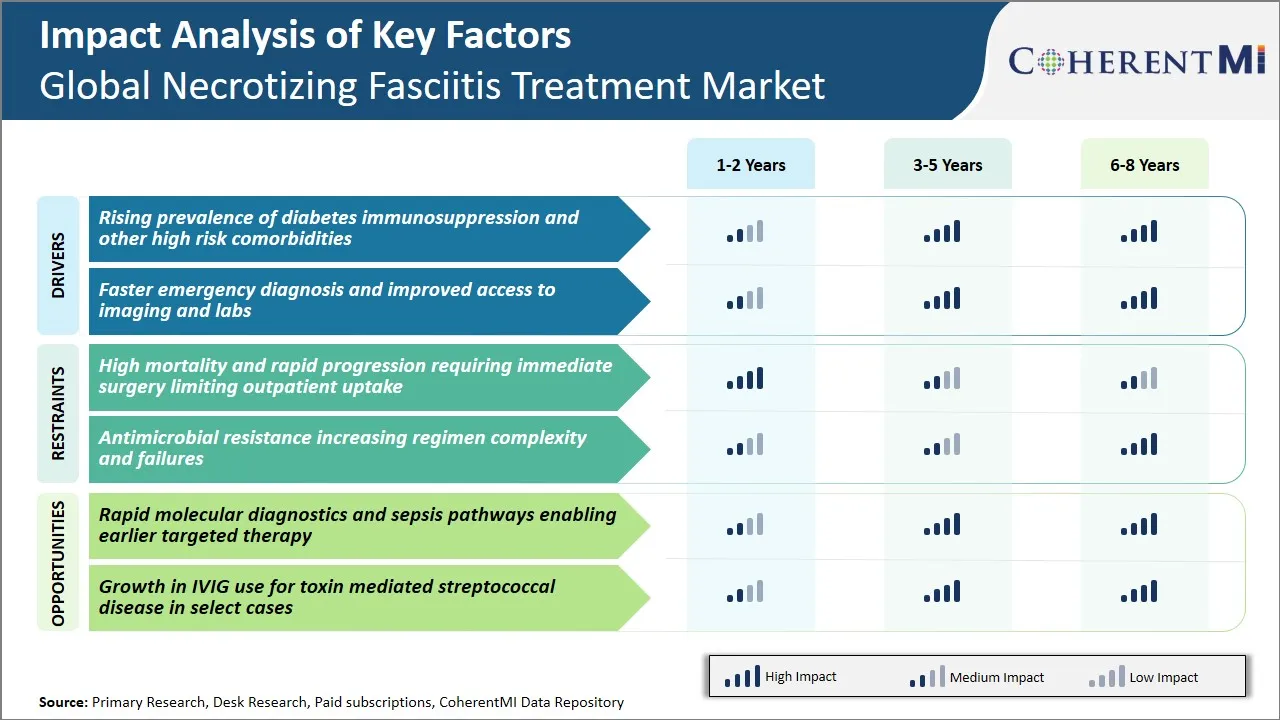
Market Driver - Rising Prevalence of Diabetes Immunosuppression and Other High Risk Comorbidities
The world healthcare is experiencing an alarming trend of increasing cases of metabolic disorders and conditions that undermine the functionality of immune system, which is a perfect breeding ground of opportunistic infections such as necrotizing fasciitis. Diabetes mellitus and especially type 2 diabetes appears to be one of the most serious predisposing factors of severe soft tissue infections that radically changes the body capacity to provide a proper immune response against quickly propagating pathogenic bacteria. The pathophysiology behind this increased susceptibility is multifaceted, encompassing hyperglycemic environments that impair neutrophil function, compromised microvascular circulation that limits the delivery of immune cells and therapeutic agents to infection sites, and the presence of advanced glycation end products that interfere with normal tissue healing processes.
For instance, among adults with type 2 diabetes, hypertension (HTN) is present in ~82.1 %, overweight/obesity in ~78.2 %, hyperlipidaemia in ~77.2 %, chronic kidney disease (CKD) in ~24.1 % and cardiovascular disease (CVD) in ~21.6 %.
(Source- https://www.ijhsr.org/IJHSR_Vol.6_Issue.11_Nov2016/20.pdf)
Market Driver - Faster Emergency Diagnosis and Improved Access to Imaging and Labs
The development of emergency medicine to diagnose emergency cases has radically changed the clinical approach to the suspected necrotizing fasciitis and allowed the health care worker to be able to differentiate the superficial infections of the soft tissues and the deep tissue necrosis that may cause life-threatening problems and demand urgent surgical interventions. Sophisticated imaging techniques especially contrast enhanced computed tomography and magnetic resonance imaging have become more advanced in their capacity to identify initial signs of fascia plane involvement, tissue hypoperfusion and gas formation in soft tissue spaces that define necrotizing infections. These diagnostics modalities are crucial in the provision of important information on the degree of tissue involvement, anatomical limits of the infection, and vascular derailment directly affecting the surgical plan and the therapeutic decision-making.
 To learn more about this report, Request Free Sample Copy
Market Challenge - High Mortality and Rapid Progression Requiring Immediate Surgery Limiting Outpatient Uptake
The global market for necrotizing fasciitis treatment is challenged by a serious threat that is based on the aggressive character of the disease and extremely high mortality rates that essentially restrict the adoption of outpatient treatment and pose serious obstacles in the development of the market. Necrotizing fasciitis, also known as the flesh-eating disease, develops at an extremely rapid rate, and the invasion of tissues proceeds at a rate of 2-3 centimeters per hour in the most severe cases. This fast evolution ensures that the patient requires urgent surgical action, which often involves several debridements in the first 24-48 hours of diagnosis to avoid the systemic sepsis and mortality. The mortality rate is 20-30% with the best treatment, which increases to above 50 percent when diagnosis is late or the patient comes in with a case of septic shock.
Market Opportunity - Advanced Molecular Diagnostics Revolutionizing Early Detection and Targeted Therapy
A unique opportunity to integrate the fast technology of molecular diagnostics with the traditional sepsis management algorithm has a transformative potential on the global market of necrotizing fasciitis treatment and may potentially change patient outcomes and open new opportunities in therapeutic interventions. Recent developments in point of care molecular diagnostic systems, such as multiplex PCR assays and next-generation sequencing systems can now identify a pathogen, as well as profiler antimicrobial resistance within 2-4 hours versus conventional culture methods that take 48-72 hours. These emerging diagnostic technologies are being incorporated into sepsis workflows in a highly streamlined manner formulating standardized routes through which necrotizing soft tissue infections can be detected and thus the introduction of targeted antimicrobial therapy can be implemented immediately.
For instance, on February 13, 2026, Metropolis Healthcare hosted a genomics symposium in Mumbai to accelerate integration of genomic and molecular diagnostic tools into clinical practice, strengthening infrastructure for earlier detection and personalized treatment pathways.
Comparative Incidence and Treatment Outcomes in Tertiary vs Non-Tertiary Necrotizing Fasciitis Care Settings
- Tertiary Care Facilities- Tertiary care centers are dealing with a larger proportion of severe and referred incidences of necrotizing fasciitis because of the sophisticated diagnostic infrastructure and multidisciplinary acumen. These are the hospitals that usually get patients with septic shock, multi-organ dysfunction, or delayed presentation, who are transferred to such hospitals by the lower-tier facilities. The levels of mortality reported in tertiary centers are usually between 15 and 30, mostly due to the severity of the disease rather than the unsatisfactory performance. ICU care, broad-spectrum IV antibiotics, and rapid microbiological testing and aggressive surgical debridement have a significant positive impact on the limb salvage and survival rates.
- Non-Tertiary Facilities- Non-tertiary hospitals, such as community and secondary care hospitals, frequently receive first-time presentations but can have poor imaging, lack of specialist surgeon, and the need of intensive care. In these settings there are delays in diagnosis and time to first debridement and this makes them more prone to septic shock, amputation and mortalities. Literature suggests that the results can be advanced significantly in case of timely suspicion that leads to the quick referral to tertiary facilities. Effective transfer processes and timely antibiotic case initiation in non-tertiary institutions are paramount in alleviating the complication rate and the general mortality rate.
Key winning strategies adopted by key players of Necrotizing Fasciitis Treatment Market
- Portfolio Expansion Through Advanced Anti-Infectives and Wound Care Innovation- Industry leaders are pursuing expanded broad-spectrum and selective anti-infective portfolios in order to cope with polymicrobial and resistant pathogens that are typically involved with necrotizing fasciitis. Investment in next-generation antibiotics, combination therapy, and toxin-inhibitory adjunct therapy add strength in positioning in the acute hospital setting. At the same time, businesses have been developing more complex wound care technologies including bioengineered matrices, negative pressure wound therapy systems and regenerative biologics to enhance post-debridement healing outcomes. This two-fold strategy enables the firms to gain value in both acute infection management and reconstructive recovery stages.
- Strategic Collaborations, Regulatory Pathways, and Geographic Expansion- The key players are increasingly seeking strategic alliances with biotech companies, research centers, and networks as it assists them in quickening the process of clinical confirmation and market penetration. There are expedited regulatory approvals, 510(k) clearances and labeling expansions to wound care and antimicrobial products to cut down commercialization periods. It is also witnessing companies venturing into the growth emerging markets where the prevalence of diabetes and the burden of infections are increasing to boost distribution networks and institutional procurement contracts. This plan improves competitive differentiation and obtaining long-term revenues streams in the critical care and surgical treatment settings.
Segmental Analysis of Necrotizing Fasciitis Treatment Market
 To learn more about this report, Request Free Sample Copy
Insights, By Treatment Modality: Antibiotic Therapy Dominance Driven by First-Line Treatment Protocol and Clinical Efficacy
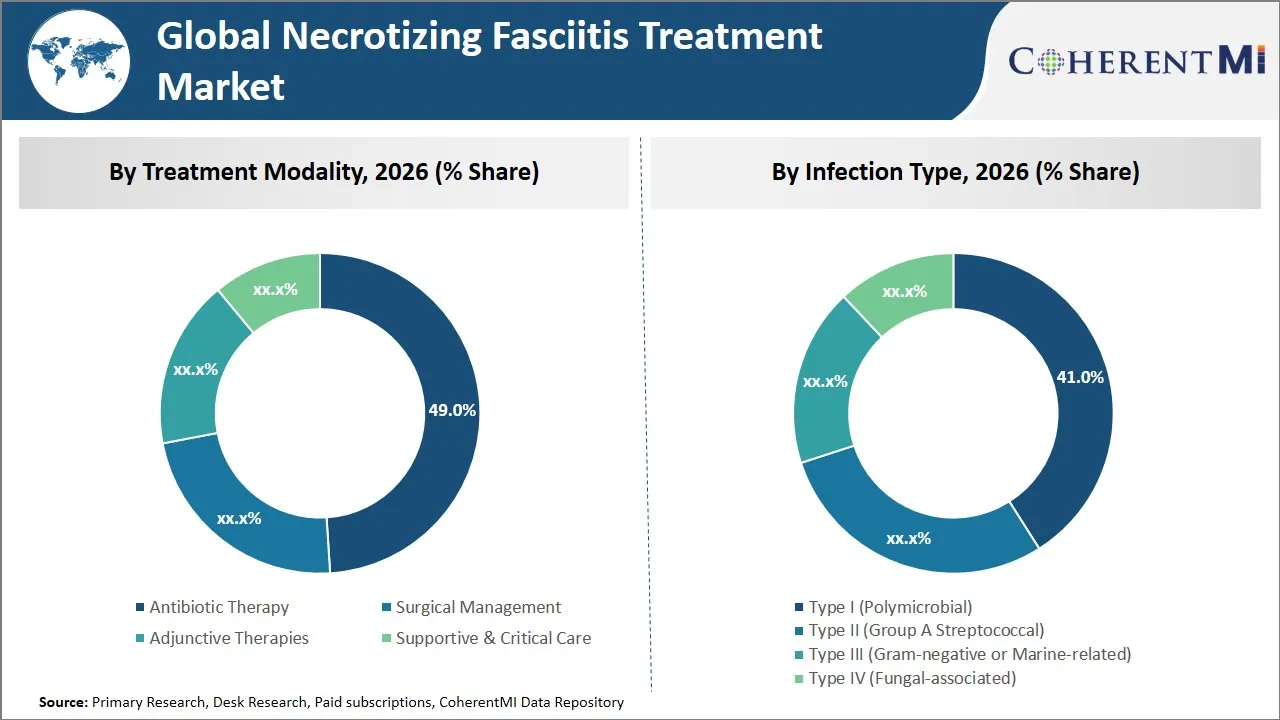
By treatment modality, antibiotic therapy takes the largest portion of the market with an estimated share of 49% in 2026, owing to its fundamental role as the cornerstone of necrotizing fasciitis treatment protocols worldwide. The dominance of antibiotic therapy can be attributed to the fact that it is the first-line intervention that is applied by the medical practitioners at the moment of diagnosis or even clinical suspicions of necrotizing fasciitis making it universally applicable in all patients across different levels of infection severity. The wide spectrum activity of contemporary antibiotic combinations contributes greatly to the dominance of this segment in terms of market. Beta-lactams, such as penicillins or cephalosporins, are also indispensable as they are demonstrated to be effective against gram-positive bacteria, especially against Group A Streptococcus that is commonly involved in Type II necrotizing fasciitis. The ease of access and the ease of knowing of their presence by healthcare providers, makes their consistent use in treatment regimens worldwide.
For instance, CDC surveillance indicates that invasive Group A Streptococcus infection rates have more than doubled over the past decade, a trend that increases reliance on effective antibiotic therapy for severe bacterial infections including necrotizing fasciitis.
(Source- https://www.cdc.gov/group-a-strep/php/surveillance/index.html)
Insights, Infection Type: Type I (Polymicrobial) Leading Market Share Through Higher Incidence and Complex Treatment Requirements
By infection type, type I (polymicrobial) takes the largest portion of the market with an estimated share of 41% in 2026, owing to its significantly higher incidence rate compared to other necrotizing fasciitis variants and the complex, multi-faceted treatment approaches required for managing polymicrobial infections. This is the most common type of infection that is more prone to older patients as well as those with comorbidities who are the highest number of patients seeking treatment of necrotizing fasciitis worldwide. The multi-microbial character of Type I infections inherently drives the market share in terms of complicated treatment and consumption of resources. These infections consist of aerobic and anaerobic bacteria, such as Enterobacteriaceae, Bacteroides species, Peptostreptococcus, and other mixed flora. This microbial complexity leads to broad spectrum antibiotic regimens which tend to need several simultaneous medications which can drastically increase the pharmaceutical intake in comparison to a monomicrobial infection.
Regional Reimbursement Landscape for IV Antibiotics, Surgical, and Adjunct Therapies in Necrotizing Fasciitis Care
- IV Antibiotics Reimbursement- IV antibiotics used in the treatment of necrotizing fasciitis in North America and most European countries are paid through bundled inpatient or nationwide insurance programs. The U.S. is generally subjected to reimbursement based on a DRG system of hospital reimbursement, whereas the European systems are subjected to reimbursement based on publicly available formulary with limitations on high-cost or new agent use. The coverage is typically regular because they are standard-of-care therapy.
- Surgical & Adjunct Therapy Reimbursement- Surgical Therapy Reimbursement Surgical debridement is highly reimbursed in the inpatient payment model of developed regions but adjunct therapies including hyperbaric oxygen therapy and advanced wound care devices demonstrate variable coverage. In the U.S they might have to be pre-authorized whereas in Europe they are reimbursed depending on national policies. The use of adjunct therapies in most Asia-Pacific markets and emerging markets is often not fully covered or is a pay out of pocket, which inhibits usage.
Additional Insights of Necrotizing Fasciitis Treatment Market
- Increasing incidence of severe bacterial infections, including necrotizing fasciitis, and rising numbers of immunocompromised patients are driving demand for effective treatment protocols.
- Rising antibiotic resistance and the high cost and complexity of care remain key challenges limiting faster adoption of advanced therapies.
- Opportunities lie in advances in rapid diagnostics, personalized antimicrobial regimens, and post-surgical wound care technologies that improve outcomes.
- Trend toward integration of next-generation diagnostics (e.g., PCR, sequencing) and combination therapies is expanding market scope beyond conventional treatment.
Competitive overview of Necrotizing Fasciitis Treatment Market
The major players operating in the global necrotizing fasciitis treatment market include Pfizer, Merck & Co, GSK, Sanofi, AstraZeneca, Bayer, Teva Pharmaceutical Industries, Hikma Pharmaceuticals, Cipla, Dr Reddys Laboratories, Aurobindo Pharma, Sun Pharma, CSL Behring, Takeda, and Grifols.
Necrotizing Fasciitis Treatment Market Leaders
- Pfizer
- Merck & Co
- GSK
- Sanofi
- AstraZeneca
Recent Developments in Necrotizing Fasciitis Treatment Market
- In March 2025, PolyNovo received the U.S. FDA 510(k) clearances for expanded thickness versions (up to 6 mm) of NovoSorb MTX and NovoSorb BTM, extending use to tunnelled and undermined wounds. The approvals strengthen its position in complex soft tissue reconstruction, including post-debridement wound management scenarios such as necrotizing fasciitis.
- In January 2025, NovaBay Pharmaceuticals, Inc. finalized a Trademark Acquisition Agreement with PhaseOne Health LLC, selling its rights to the NeutroPhase, PhaseOne, and OmniPhase wound care trademarks, along with related inventory.
- In April 2023, Aroa Biosurgery launched its Symphony advanced wound care product in the U.S. designed to support healing and reduce time to wound closure in complex and compromised wounds including surgical and trauma-related wound settings relevant to severe soft tissue injury management. Symphony expands Aroa’s extracellular matrix-based portfolio for complex wound applications.
Necrotizing Fasciitis Treatment Market Segmentation
- By Treatment Modality
- Antibiotic Therapy
- Beta-lactams (Penicillins, Cephalosporins)
- Carbapenems
- Glycopeptides (Vancomycin class)
- Lincosamides (Clindamycin)
- Oxazolidinones
- Combination Regimens
- Surgical Management
- Initial Debridement
- Repeat Debridement Procedures
- Amputation Procedures
- Reconstructive / Skin Grafting Surgery
- Adjunctive Therapies
- Hyperbaric Oxygen Therapy (HBOT)
- Intravenous Immunoglobulin (IVIG)
- Negative Pressure Wound Therapy (NPWT)
- Supportive & Critical Care
- Intensive Care Management
- Fluid & Electrolyte Management
- Vasopressor Support
- Pain Management
- Antibiotic Therapy
- By Infection Type
- Type I (Polymicrobial)
- Type II (Group A Streptococcal)
- Type III (Gram-negative or Marine-related)
- Type IV (Fungal-associated)
- By Route of Administration
- Intravenous
- Oral
- Topical
- Inhalational (HBOT)
- By Drug Class
- Broad-Spectrum Antibiotics
- Targeted Antibiotics
- Antifungals
- Immunomodulators
- Analgesics & Supportive Drugs
- By End User
- Hospitals
- Tertiary Care Centers
- Trauma Centers
- Ambulatory Surgical Centers
- Specialty Wound Care Clinics
- Hyperbaric Treatment Center
- By Patient Demographics
- Adult
- Geriatric
- Pediatric
- By Severity Level
- Early-Stage (Localized)
- Advanced-Stage (Systemic Involvement)
- Septic Shock Cases

Would you like to explore the option of buying individual sections of this report?
Vipul Patil is a dynamic management consultant with 6 years of dedicated experience in the pharmaceutical industry. Known for his analytical acumen and strategic insight, Vipul has successfully partnered with pharmaceutical companies to enhance operational efficiency, cross broader expansion, and navigate the complexities of distribution in markets with high revenue potential.