ePharmacy Market SIZE AND SHARE ANALYSIS - GROWTH TRENDS AND FORECASTS (2026 - 2033)
ePharmacy Market, By Drug Type (Over-the-Counter (OTC) Drugs, Prescription Drugs), By Product Type (...
ePharmacy Market Size - Analysis
The global ePharmacy market is estimated to be valued at USD 150.70 Bn in 2026 and is expected to reach USD 436.30 Bn by 2033, exhibiting a compound annual growth rate (CAGR) of 16.4% from 2026 to 2033. This remarkable growth trajectory reflects the accelerating digital transformation within the pharmaceutical sector, driven by increasing consumer preference for convenient online medication purchases and enhanced accessibility to healthcare services.
The substantial market expansion underscores the sector's resilience and adaptability to evolving healthcare delivery models. The ePharmacy market is experiencing significant transformation driven by several key trends including widespread adoption of telemedicine services, integration of artificial intelligence for personalized medication management, and expansion of subscription-based pharmaceutical delivery models.
Market Size in USD Bn
CAGR16.4%
| Study Period | 2026 - 2033 |
| Base Year of Estimation | 2025 |
| CAGR | 16.4% |
| Market Concentration | Medium |
| Major Players | CVS Health Corporation, Walgreens Boots Alliance Inc, Amazon Pharmacy, Express Scripts Holding Company, OptumRx Inc, Walmart Inc, The Kroger Co, Giant Eagle Inc, DocMorris (Zur Rose Group), Rite Aid Corporation, GoodRx Holdings Inc, PillPack (Amazon), Netmeds (Reliance), PharmEasy, Apollo Pharmacy and Among Others |

please let us know !
ePharmacy Market Trends
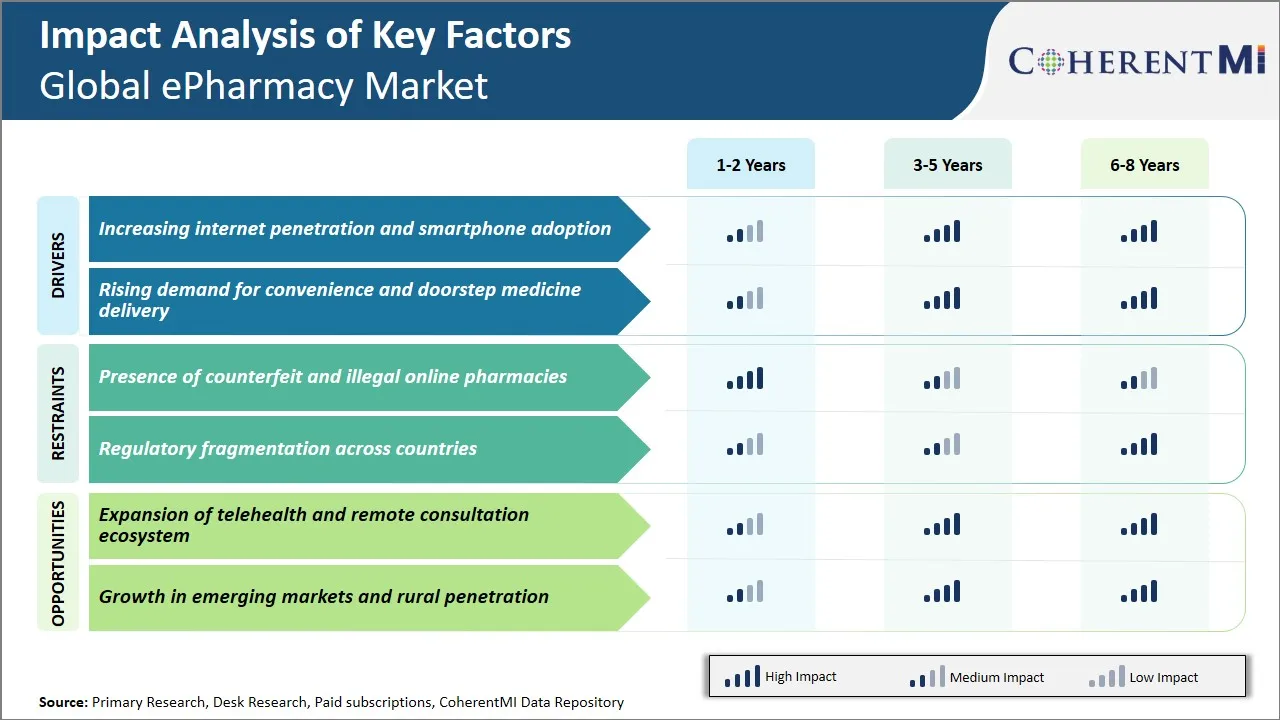
Market Driver - Increasing Internet Penetration and Smartphone Adoption
The exponential growth in internet penetration and smartphone adoption across the globe has emerged as a fundamental catalyst propelling the ePharmacy market to unprecedented heights. This digital transformation has fundamentally altered consumer behavior and expectations, creating an environment where online pharmaceutical services can flourish and reach previously untapped market segments.
The proliferation of high-speed internet connectivity, particularly in developing nations, has dismantled traditional barriers that once limited access to digital healthcare solutions. As internet infrastructure continues to expand into rural and remote areas, previously underserved populations are gaining access to comprehensive pharmaceutical services that were once geographically constrained to urban centers.
For instance, in October 2024, Amazon expanded its Amazon Pharmacy services across additional U.S. regions and upgraded its mobile app experience with features such as prescription management, automatic refills, and insurance integration. The launch was aimed at capturing the growing base of smartphone users and digitally connected consumers, reinforcing how increasing internet penetration is accelerating adoption of app-based ePharmacy platforms.
(Source: Amazon)
Market Driver - Rising Demand for Convenience and Doorstep Medicine Delivery
The contemporary consumer landscape is increasingly characterized by a fundamental shift toward convenience-driven purchasing behaviors, and this trend has profoundly impacted the pharmaceutical sector through the rising demand for doorstep medicine delivery services. Modern consumers, particularly those managing chronic conditions requiring regular medication, are seeking solutions that minimize disruption to their daily routines while ensuring consistent access to essential medications. The traditional model of visiting physical pharmacies, waiting in queues, and adhering to rigid operating hours has become increasingly incompatible with the fast-paced lifestyle preferences of today's consumers.
 To learn more about this report, Request Free Sample Copy
Market Challenge - Presence of Counterfeit and Illegal Online Pharmacies
The proliferation of counterfeit and illegal online pharmacies represents one of the most significant threats to the legitimate global ePharmacy market, undermining consumer trust and regulatory frameworks while posing severe public health risks. According to the World Health Organization, approximately 10% of medical products in low and middle-income countries are substandard or falsified, with online channels being particularly vulnerable to such activities.
These rogue operators exploit regulatory gaps and consumer price sensitivity by offering prescription medications without proper verification, selling expired or contaminated drugs, and operating across jurisdictions to evade enforcement. The sophistication of these illegal platforms has increased substantially, with many creating convincing websites that mimic legitimate pharmacies, complete with fake licensing credentials and fraudulent customer testimonials.
Market Opportunity - Expansion of Telehealth and Remote Consultation Ecosystem
The rapid expansion of telehealth and remote consultation services presents an unprecedented opportunity for the global ePharmacy market, creating a seamless digital healthcare ecosystem that addresses the growing consumer demand for convenient, accessible, and integrated healthcare solutions. This growth directly benefits ePharmacies as telehealth consultations naturally conclude with prescription fulfillment needs, creating a logical integration point where online pharmacies can capture market share from traditional brick-and-mortar establishments.
For instance, in March 2025, telehealth providers, Teladoc Health and LifeMD, announced a strategic partnership with Gifthealth, the pharmacy partner of Eli Lilly, to enable direct home delivery of the weight-loss drug Zepbound through virtual care platforms.
(Source: LifeMD)
Digital Payments Dominance vs Cash on Delivery Trends in the Global ePharmacy Market
- Digital payments dominate the global ePharmacy market, accounting for roughly 65–70% of transactions, driven by seamless in-app checkout, subscription models, e-prescription integration, and growing consumer trust in online healthcare platforms. Markets such as North America and parts of Asia Pacific have accelerated adoption due to high smartphone penetration, UPI/wallet ecosystems, and incentives like discounts and faster order processing. Platforms prioritize prepaid orders as they reduce return rates, improve working capital cycles, and enable automated fulfillment.
- Cash on Delivery (COD) still holds a 20–30% share, mainly in emerging markets where trust gaps, limited digital literacy, or preference for pay-on-delivery persist. However, its share is steadily declining due to higher operational costs, order cancellations, and regulatory push toward digital traceability in pharmaceutical transactions. Over the next few years, COD will remain relevant in tier-2/3 regions but will be structurally phased down as digital infrastructure and trust improve.
Key winning strategies adopted by key players of ePharmacy Market
- Growth and Customer Acquisition Strategies- Key players focus on aggressive customer acquisition through discounting, subscription models, and mobile-first platforms that enable seamless ordering and repeat purchases. Integration with telemedicine and e-prescription services has become a core strategy, creating a closed-loop digital healthcare ecosystem that drives higher prescription volumes and user retention. Expansion into tier-2 and tier-3 markets further supports scale, tapping into underserved populations with rising digital adoption.
- Operational and Competitive Advantage Strategies- Companies are strengthening control over the value chain through inventory-led models, private label expansion, and optimized last-mile delivery for faster fulfillment. Strategic partnerships with hospitals, insurers, and healthcare providers help secure consistent demand while improving credibility. Additionally, players are leveraging AI-driven personalization and pursuing mergers and acquisitions to enhance capabilities, improve margins, and consolidate their market position.
Segmental Analysis of ePharmacy Market
 To learn more about this report, Request Free Sample Copy
Insights, By Drug Type: Over-the-Counter (OTC) Drugs Drive Through Accessibility and Consumer Autonomy
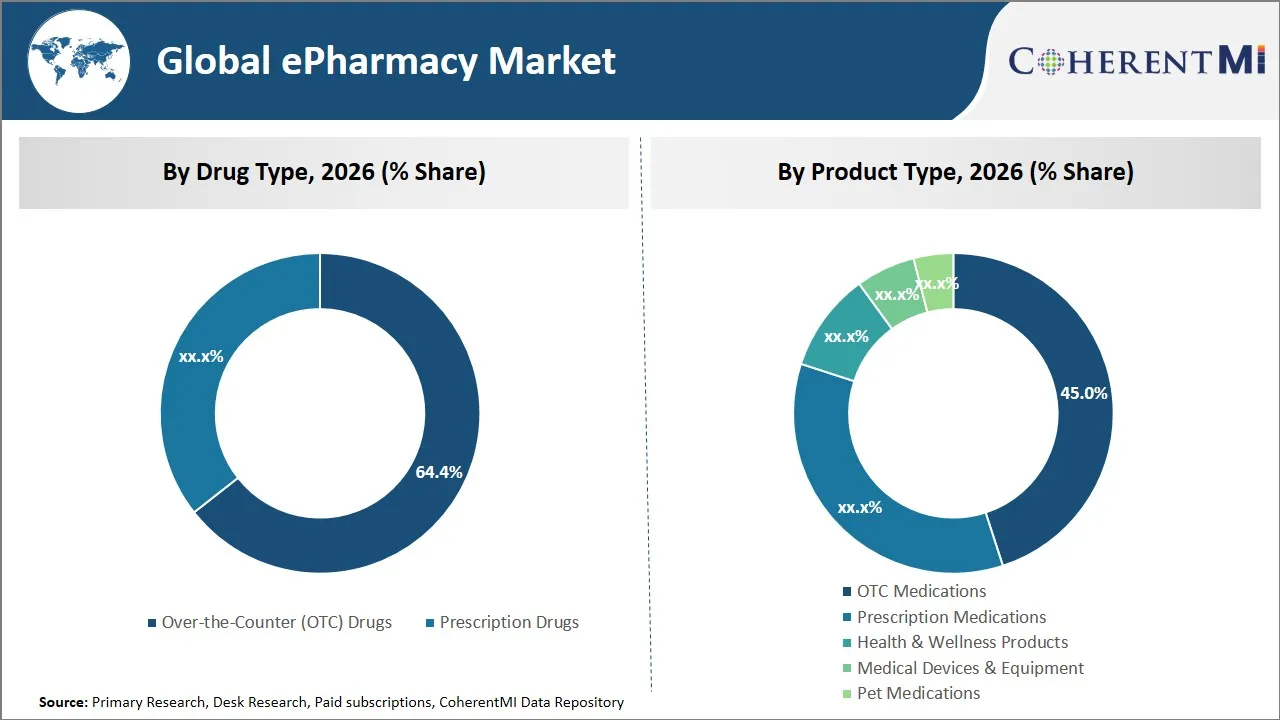
By drug type, the Over-the-Counter (OTC) drugs segment takes the largest portion of the market with an estimated share of 64.4% in 2026, owing to the inherent accessibility and self-medication convenience these products offer through digital platforms. The dominance of OTC drugs in the global ePharmacy market stems from several fundamental factors that align perfectly with consumer behavior and regulatory frameworks governing online pharmaceutical sales.
The primary driver behind OTC drugs' market leadership lies in their regulatory advantage, as these medications do not require prescriptions from healthcare providers. This characteristic eliminates significant barriers that typically complicate online pharmaceutical transactions, such as prescription verification processes, doctor consultations, and regulatory compliance checks. Consumers can purchase OTC medications instantly through ePharmacy platforms without waiting for medical appointments or prescription approvals, making the entire purchasing process seamless and time-efficient.
For instance, in October 2023, Walmart launched an expanded OTC medicines assortment on Walmart Health Virtual Care platform, enabling customers to consult healthcare providers online and instantly purchase recommended non-prescription drugs through its digital pharmacy interface. The initiative integrated teleconsultation with OTC product access, strengthening Walmart’s omnichannel ePharmacy presence and improving convenience for routine healthcare needs.
(Source: Walmart)
Insights, By Product Type: OTC Medications is Driven by Self-Care Revolution and Health Consciousness Propel OTC Medications to Market Leadership
By product type, the OTC medications segment takes the largest portion of the market with an estimated share of 45% in 2026, owing to the growing global emphasis on preventive healthcare and consumer empowerment in managing personal health and wellness routines. The dominance of OTC medications within the ePharmacy product portfolio reflects fundamental shifts in healthcare consumption patterns and consumer attitudes toward self-directed health management.
The preventive healthcare movement has significantly influenced consumer purchasing behavior, with individuals increasingly seeking proactive approaches to maintain health rather than reactive treatments for illnesses. OTC medications serve this preventive mindset by offering vitamins, supplements, immune system boosters, and wellness products that support overall health maintenance. Consumers view these products as essential components of their daily health routines, driving consistent demand through digital pharmacy channels.
For instance, in July 2023, Perrigo Company plc announced the U.S. launch of its Opill (norgestrel 0.075 mg) as the first FDA-approved over-the-counter oral contraceptive, making birth control available without a prescription. The product rollout included availability across retail pharmacies and ePharmacy platforms, significantly expanding consumer access to OTC medications through digital and online channels.
(Source: Perrigo Company plc)
Global ePharmacy Market Regulatory Landscape and Country-Level Compliance Framework
- Developed Markets Regulatory Landscape- In developed regions such as the U.S. and the European Union, ePharmacy operations are tightly regulated with strict requirements around prescription validation, licensed pharmacist oversight, and drug authenticity. Authorities mandate verified internet pharmacy certifications, secure e-prescription systems, and compliance with data protection laws. Cross-border drug sales are generally restricted, and platforms must ensure full traceability across the supply chain to prevent counterfeit distribution.
- Emerging Markets Regulatory Evolution- In emerging economies like India and China, the regulatory framework is still evolving, creating both growth opportunities and compliance challenges. Governments are increasingly formalizing rules around online drug sales, including mandatory prescription uploads, platform registration, and restrictions on certain drug categories. However, enforcement gaps, fragmented policies, and varying state-level regulations continue to impact market consistency, pushing companies to adopt cautious and compliance-heavy expansion strategies.
Additional Insights of ePharmacy Market
- The global ePharmacy market is witnessing a rapid shift from traditional offline pharmacies to digital platforms, driven by convenience, competitive pricing, and doorstep delivery services.
- It is experiencing strong double-digit growth, supported by increasing internet penetration and rising smartphone adoption worldwide.
- The global ePharmacy market is increasingly integrating with telemedicine and e-prescription services, transforming into a comprehensive digital healthcare ecosystem.
- The global ePharmacy market is leveraging advanced technologies such as artificial intelligence for personalized recommendations and improved customer experience.
Competitive overview of ePharmacy Market
The major players operating in the global ePharmacy market include CVS Health Corporation, Walgreens Boots Alliance Inc, Amazon Pharmacy, Express Scripts Holding Company, OptumRx Inc, Walmart Inc, The Kroger Co, Giant Eagle Inc, DocMorris (Zur Rose Group), Rite Aid Corporation, GoodRx Holdings Inc, PillPack (Amazon), Netmeds (Reliance), PharmEasy, and Apollo Pharmacy.
ePharmacy Market Leaders
- CVS Health Corporation
- Walgreens Boots Alliance Inc
- Amazon Pharmacy
- Express Scripts Holding Company
- OptumRx Inc
- Walmart Inc
- The Kroger Co
- Giant Eagle Inc
- DocMorris (Zur Rose Group)
- Rite Aid Corporation
- GoodRx Holdings Inc
- PillPack (Amazon)
- Netmeds (Reliance)
- PharmEasy
- Apollo Pharmacy
Recent Developments in ePharmacy Market
- In December 2025, Healthera, a U.K.-based digital health platform, announced a strategic partnership with Uber Eats to enable rapid delivery of medicines and health products from local pharmacies across the U.K.
- In October 2025, Amazon announced the launch of prescription kiosks under Amazon Pharmacy at One Medical clinics in the U.S., introducing a hybrid ePharmacy model combining digital ordering with physical pickup points.
- In August 2025, Quick commerce company Zepto launched Zepto Pharmacy, enabling 10-minute medicine delivery across major Indian cities including Mumbai, Bengaluru, Delhi-NCR, and Hyderabad, marking its formal entry into the ePharmacy segment.
ePharmacy Market Segmentation
- By Drug Type
- Over-the-Counter (OTC) Drugs
- Prescription Drugs
- By Product Type
- OTC Medications
- Prescription Medications
- Health & Wellness Products
- Medical Devices & Equipment
- Pet Medications
- By Platform Type
- Mobile Applications
- Web-Based Platforms
- By Payment Mode
- Online Payment
- Cash on Delivery
- Insurance-Based Payments
- By End User
- Individual Consumers
- Hospitals & Clinics

Would you like to explore the option of buying individual sections of this report?
Ghanshyam Shrivastava - With over 20 years of experience in the management consulting and research, Ghanshyam Shrivastava serves as a Principal Consultant, bringing extensive expertise in biologics and biosimilars. His primary expertise lies in areas such as market entry and expansion strategy, competitive intelligence, and strategic transformation across diversified portfolio of various drugs used for different therapeutic category and APIs. He excels at identifying key challenges faced by clients and providing robust solutions to enhance their strategic decision-making capabilities. His comprehensive understanding of the market ensures valuable contributions to research reports and business decisions.
Ghanshyam is a sought-after speaker at industry conferences and contributes to various publications on pharma industry.