Cocoa Liquor Market SIZE AND SHARE ANALYSIS - GROWTH TRENDS AND FORECASTS (2026 - 2033)
Cocoa Liquor Market is segmented By Product Type (Dutch, Natural cocoa liquor), By Cocoa Variety (Fo...
Cocoa Liquor Market Size - Analysis
The Global Cocoa Liquor Market is estimated to be valued at USD 7.85 Bn in 2026 and is expected to reach USD 12.11 Bn by 2033, exhibiting a compound annual growth rate (CAGR) of 6.4% from 2026 to 2033. This substantial market expansion reflects the increasing global demand for chocolate products, premium confectionery items, and the growing adoption of cocoa-based ingredients across various food and beverage applications.
Market Size in USD Bn
CAGR6.4%
| Study Period | 2026 - 2033 |
| Base Year of Estimation | 2025 |
| CAGR | 6.4% |
| Market Concentration | Medium |
| Major Players | Barry Callebaut AG, Cargill, Incorporated, Olam International Limited, Blommer Chocolate Company, Nestlé S.A. and Among Others |

please let us know !
Cocoa Liquor Market Trends
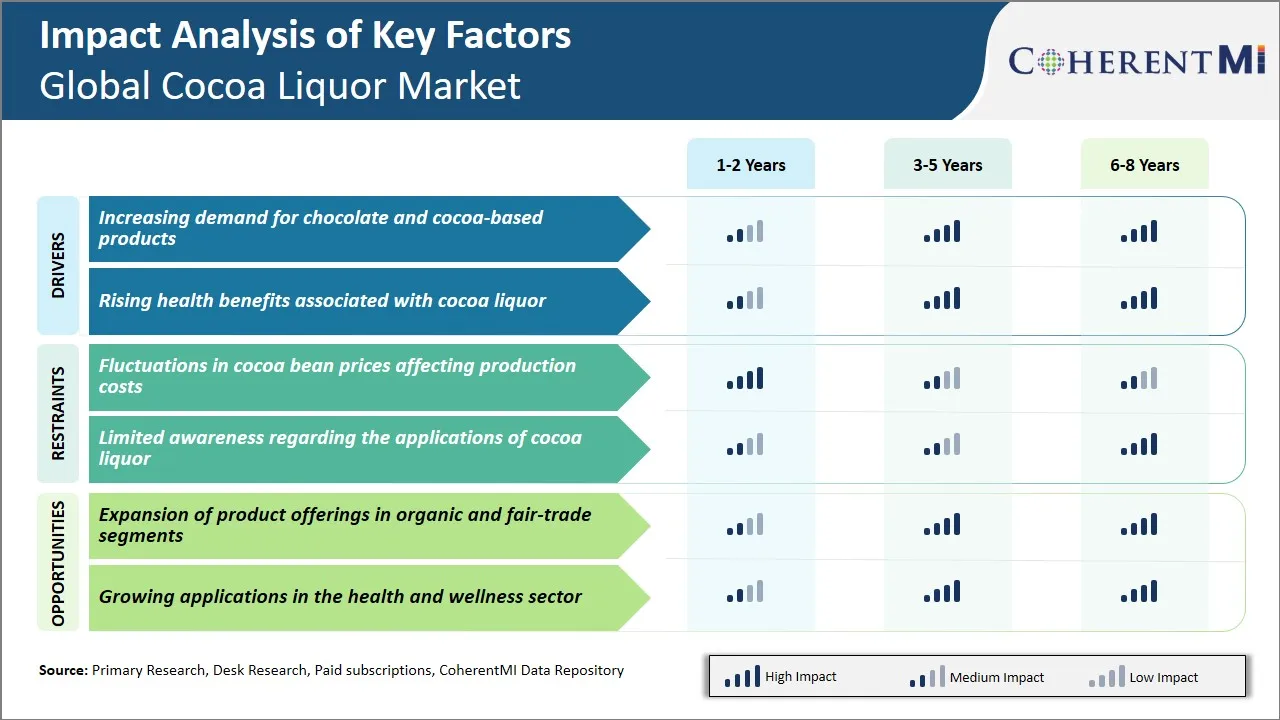
Market Driver - Increasing Demand for Chocolate and Cocoa-based Products
The global appetite for chocolate and cocoa-derived products continues to surge across diverse demographic segments and geographical regions, establishing itself as a fundamental driver propelling the cocoa liquor market forward. This growing demand is fueled by various factors that relate and are influenced by the changing consumer preferences, lifestyles, and the growing uses of cocoa-based products in different sectors. The chocolate industry will continue to be the driving force of this upward trend as consumers are slowly moving towards high-end chocolate experiences that focus on quality, source, and craftsmanship. This premiumization trend has presented significant possibilities to cocoa liquor producers to provide high-quality products to cater to the high demands of luxury chocolate producers and upscale confectionery companies.
Market Driver - Rising Health Benefits Associated with Cocoa Liquor
The increasing amount of scientific literature emphasizing the nutritional and curative values of cocoa liquor has become a strong market force, which essentially changes the perception of consumers and develops new markets based on health-oriented consumption. Such a paradigm shift will be a shift in the traditional mindsets of chocolate as a purely indulgent product, and instead, the products based on cocoa can serve as functional foods that can be used to positively influence the overall wellness and disease prevention plans. The availability of flavonoids (compounds of catechin and epicatechin) in cocoa liquor has been an issue of considerable interest to the medical establishments, as well as to health-conscious consumers who seek the option of natural substitutes to synthetic health supplements and pharmaceutical intervention.
For example, Cocoa flavanol consumption improved cognitive performance, reduced blood pressure, and improved metabolic markers in an 8‑week clinical trial of older adults, linking regular cocoa intake with measurable physiological improvements.
 To learn more about this report, Request Free Sample Copy
Market Challenge - Fluctuations in Cocoa Bean Prices Affecting Production Costs
The challenges of constant changes in the prices of cocoa beans are very strong head winds to the global cocoa liquor market as it directly affects the cost of production and profit margin of manufacturers. The cocoa bean price is extremely volatile because of various factors, which are intertwined such as weather conditions of the major cocoa producing areas such as West Africa, geopolitics, currency changes, and speculative trading among others. Such volatility poses a significant challenge to cocoa liquor producers to have consistent pricing policies and gain a stable profit margin.
Market Opportunity - Premium Positioning Through Organic and Fair-Trade Market Expansion
The rising demand for organic and fair-trade cocoa liquor products offers an attractive growth prospect to the market players to enjoy high-pricing opportunities and increase their target market base. This has been especially strong in advanced markets such as the North America and Europe where the majority of the consumers have shown readiness to pay higher prices of 15 to 40 percent more than the conventional products as certified organic and fair-trade products. The opportunity that cocoa liquor producers have is to develop direct relations with verified organic cocoa farmers and to have transparent supply chain tracking technologies that would be attractive to the environment-friendly consumer market and business partners.
Key winning strategies adopted by key players of Cocoa Liquor Market
- Product Innovation: The firms are also seeking to produce new innovative cocoa liquor products to meet the evolving consumer tastes. As an illustration, dark chocolates with premium cocoa content are gaining more popularity, and liquor-based products containing cocoa with added health advantages such as antioxidants and better digestion are gaining popularity. Mars, Inc. has launched single origin cocoa products to attract consumers in the market who want exceptional flavors and sustainability.
- Market Growth: The major players are venturing to the emerging markets especially in Asia Pacific and Latin America whereby the use of chocolates is also on the increase. The expansion of a new production facility in India by Barry Callebaut, a major supplier of cocoa and chocolate, to satisfy increasing demand for cocoa liquor and other chocolate components in the region is a move that was made in Asia Pacific.
- Sustainability Focus: Firms within the cocoa liquor industry are putting more and more focus on sustainable sourcing, in addition, to environment-friendly packaging solutions. In its Cocoa Plan, Nestle has gone a long way to ensure that it sources 100 percent sustainable cocoa that ensures sustainability and responsibility concerning the environment and society.
Segmental Analysis of Cocoa Liquor Market
 To learn more about this report, Request Free Sample Copy
Insights, By Product Type - Dutch Cocoa Liquor’s Dominance is Driven by Superior Processing Technology and Industrial Applications
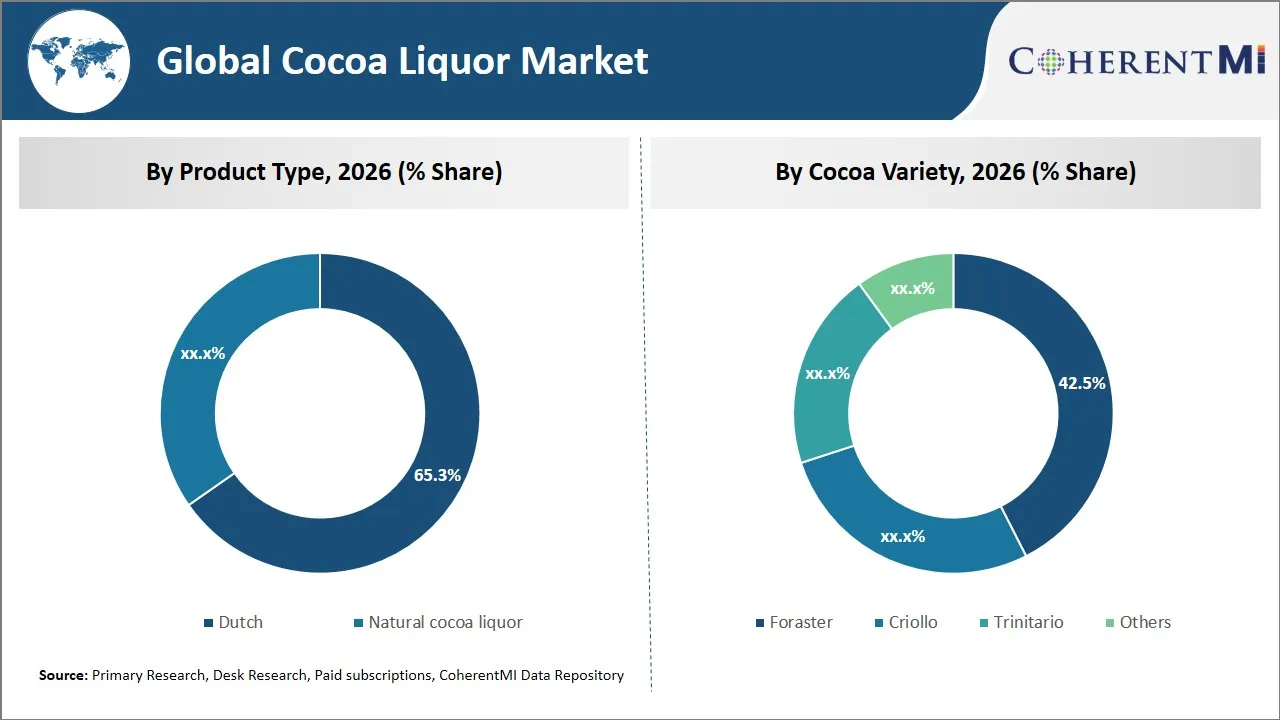
Dutch segment is expected to contribute 65.3% share of the market in 2026, owing to its advanced alkalization process that delivers superior functional properties and enhanced versatility across multiple industrial applications. The alkalization process or Dutch processing method is a process that takes place in cocoa beans, nibs or liquor where alkali is used in neutralizing the innate acids so that the product is left with much enhanced quality that is likely to attract manufacturers in many industries.
The main incentive to making Dutch cocoa liquors dominate the market is that it has better solubility characteristics. The process of alkalization exposes the liquid to a more neutral or slightly alkaline level of the pH level compared to the natural acidic level and this greatly increases the ability of the liquor to be mixed with other liquids well. This property is very important in industrial chocolate production where stability in texture and seamless incorporation is a most important aspect.
Insights, By Cocoa Variety - Foraster Segment Dominates the Market due to Agricultural Abundance and Commercial Viability
Foraster segment is projected to contribute 42.5% share of the market in 2026, because of its outstanding agricultural flexibility, high yield traits, and cheap cultivation methods that do not pose a challenge to global commercial production of cocoa. The most common type of cocoa, the Foraster type, which is the bulk cocoa type is the most common cocoa liquor type because it has practical benefits in large scale farm production and is in a position to cater to the quantity demands of the chocolate-making industry in the market.
The main force behind Foraster’s market dominance is agricultural resilience. This type of cocoa proves to be more resistant to more frequent diseases that affect cocoa plants such as frosty pod rot, witches broom, and black pod disease.
Supply Chain & Cocoa Bean Volatility
|
Factor |
Description |
Trend |
Key Data Points |
|
Cocoa Bean Price Volatility |
Fluctuation in cocoa bean prices due to global supply-demand dynamics |
Cocoa bean prices are rising due to production issues in major producing countries |
5–10% annual fluctuation in prices (historical average) |
|
Cocoa Liquor Demand |
Global chocolate demand, especially premium and dark chocolate |
Increasing demand for high-quality chocolate and healthier options |
7% growth in cocoa liquor demand, 2020-2025 |
|
Political/Economic Factors |
Trade restrictions, tariffs, and changes in government policies affecting cocoa exports |
Political instability and tariffs affecting cocoa exports |
Recent political unrest in the Ivory Coast has raised export prices by 15% |
Additional Insights of Cocoa Liquor Market
- North America’s Dominance: North America enjoys maximum market share in the cocoa liquor market since North America boasts an already developed culture in terms of chocolate consumption and the increasing demand for chocolate products of higher quality and of premium quality.
- Health-Conscious Consumers Driving Product Innovation: With increasing consumer interest in healthier food options, there has been a surge in demand for cocoa liquor products that are organic, sugar-free, and rich in antioxidants. Manufacturers are responding to this trend by introducing innovative cocoa liquor offerings that cater to the growing demand for functional and guilt-free indulgences, including dark chocolate varieties with higher cocoa content and minimal added sugars.
- Cocoa Liquor’s Potential Health Benefits: Cocoa liquor is gaining recognition for its potential health benefits, including its rich content of flavonoids, which are known to improve heart health, reduce inflammation, and enhance cognitive function. This growing awareness about the health benefits of cocoa liquor is contributing to its increased use in functional food and beverage products, aligning with the rising trend of incorporating functional ingredients into everyday diets.
Competitive overview of Cocoa Liquor Market
The major players operating in the Global Cocoa Liquor Market include Barry Callebaut AG, Cargill, Incorporated, Olam International Limited, Blommer Chocolate Company, Nestlé S.A., The Hershey Company, Mars, Incorporated, Puratos Group, Cémoi Group, and ECOM Agroindustrial Corporation Ltd.
Cocoa Liquor Market Leaders
- Barry Callebaut AG
- Cargill, Incorporated
- Olam International Limited
- Blommer Chocolate Company
- Nestlé S.A.
Recent Developments in Cocoa Liquor Market
- On February 1, 2026, ofi introduced three new single-origin cocoa liquors under its deZaan brand, sourced from Papua New Guinea, Uganda, and the Dominican Republic. Each crafted with bespoke roasting profiles, the range unlocks distinct, origin-led flavor characteristics, traditionally associated with artisanal products.
- In October 2025, Celleste Bio, an early-stage cocoa tech company, announced a major milestone in building a climate resilient cocoa supply.
Cocoa Liquor Market Segmentation
- By Product Type
- Dutch
- Natural cocoa liquor
- By Cocoa Variety
- Foraster
- Criollo
- Trinitario
- Others
- By Form
- Wafers
- Blocks
- Chips
- Others
- By Application
- Food and Beverages
- Confectionery
- Cosmetics and Personal Care
- Pharmaceuticals
- Others (e.g., nutritional supplements)

Would you like to explore the option of buying individual sections of this report?
Ramprasad Bhute is a Senior Research Consultant with over 6 years of experience in market research and business consulting. He manages consulting and market research projects centered on go-to-market strategy, opportunity analysis, competitive landscape, and market size estimation and forecasting. He also advises clients on identifying and targeting absolute opportunities to penetrate untapped markets.