Kimchi Market SIZE AND SHARE ANALYSIS - GROWTH TRENDS AND FORECASTS (2026 - 2033)
Kimchi Market is segmented By Product (Baechu Kimchi, Kkakdugi Kimchi, Chonggak Kimchi, Others), By ...
Kimchi Market Size - Analysis
The global kimchi market is estimated to be valued at USD 6.56 Bn in 2026 and is expected to reach USD 10.67 Bn by 2033, exhibiting a compound annual growth rate (CAGR) of 7.2% from 2026 to 2033. This robust growth trajectory reflects the increasing global acceptance of Korean cuisine and the rising awareness of fermented foods' health benefits among consumers worldwide.
Market Size in USD Bn
CAGR7.2%
| Study Period | 2026 - 2033 |
| Base Year of Estimation | 2025 |
| CAGR | 7.2% |
| Market Concentration | Medium |
| Major Players | Daesang Corporation, CJ CheilJedang Corp., Pulmuone U.S.A., Lucky Foods, Weifang Jiahe Food Co., Ltd and Among Others |

please let us know !
Kimchi Market Trends
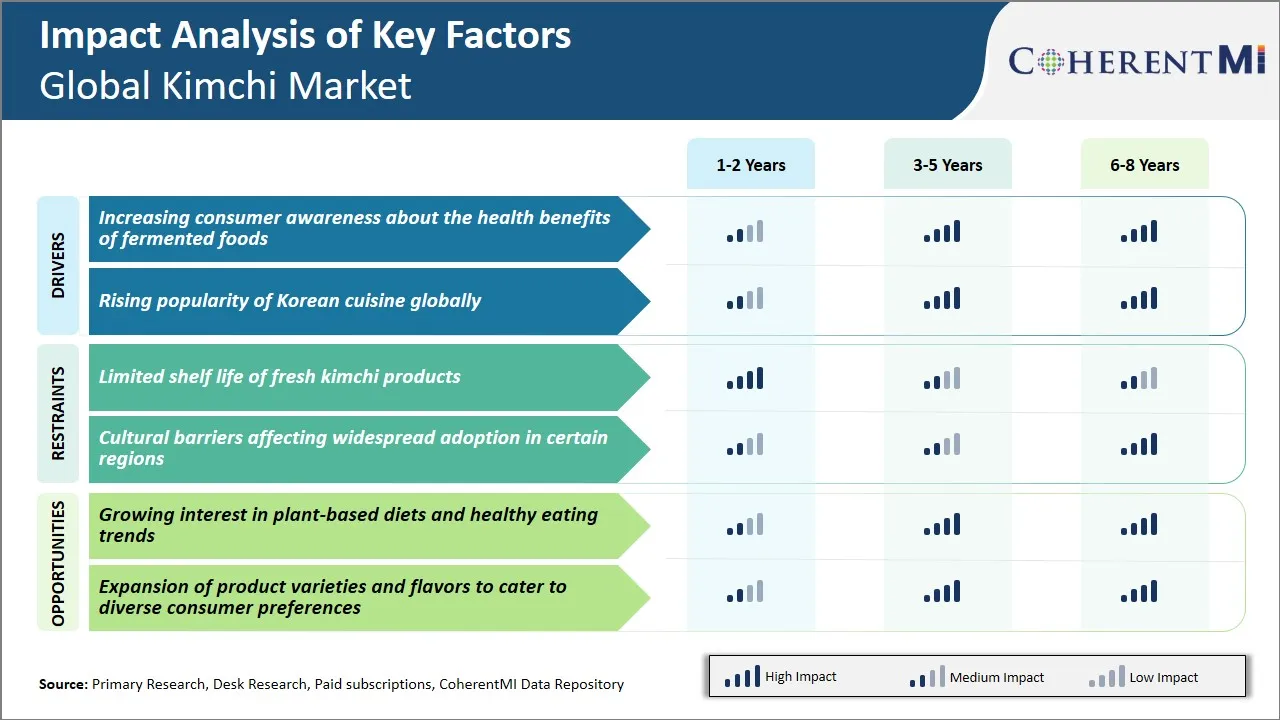
Market Driver - Increasing Consumer Awareness about the Health Benefits of Fermented Foods
The contemporary global consumer landscape has witnessed a remarkable shift towards health-conscious food choices, with fermented ingredients emerging as a cornerstone of nutritional wellness. Such a change in food preferences has made kimchi a very desirable superfood with the scientific evidence that fermentation is beneficial to human health playing the main role. In the modern era, consumers are becoming more and more informed about the relationship between gut and wellbeing health, which has resulted in a demand boom of foods with probiotics such as kimchi. The kimchi fermentation process yields useful lactic acid bacteria especially Lactobacillus species; it has been tested that these bacteria help promote digestive well-being, immune system functioning, and even promote a better mental state through the gut-brain axis.
Market Driver - Rising Popularity of Korean Cuisine Globally
The international food scene has been an unprecedented adoption of Korean food, which has had a fundamental impact on the fact that kimchi is not a regional food anymore, but an international product that is sought after in the culinary scene. This cultural trend stretches much further than mere food trends, as it is a total admiration of Korean culinary traditions which has been further enhanced by the wider Korean Wave, or Hallyu, of Korean entertainment, music and lifestyle. The cultural gap that has been formed by the international success of the Korean dramas, K-pop music and Korean films has made global consumers more responsive to the idea of trying the true flavor of Korean food and the techniques used to cook it.
 To learn more about this report, Request Free Sample Copy
Market Challenge - Limited Shelf Life of Fresh Kimchi Products
The freshness of kimchi is a major operational and business drawback of market players in the global kimchi market. The standard kimchi, which is made by fermentation of vegetables and has live probiotics, is usually of good quality only 3-6 months when refrigerated, posing significant inventory control challenges to producers and retailers. This short shelf life has a direct influence on the distribution strategies, especially those companies that want to expand to markets that are at long geographical distances and the transportation time can take a significant part of the product viable life. The problem is also complicated by the fact that the fermentation process continues to take place even at refrigeration, therefore changing the taste profile, texture and acidity levels with time, causing dissatisfaction and product recalls among the consumers.
Market Opportunity - Growing Interest in Plant-Based Diets and Healthy Eating Trends
The introduction of plant-based diets and healthy consumption trends in the market is a significant business expansion potential of the kimchi market, which places this traditional Korean fermented vegetable dish as a high-quality functional food product. Kimchi is the best fit to the modern tastes and has a balanced nutrition of low calorie, high in probiotics, vitamin ingredients A and C, fiber, and beneficial bacteria which help in digestive well-being. The scientific evidence now indicating the gut-brain link and the significance of microbiome diversity has helped take fermented foods such as kimchi beyond the status of ethnic specialty food and make it a health product. The tendency is especially high among millennial and Gen z consumers who actively search foods with known health effects and are ready to spend higher prices on the products that can help them to achieve their wellness objectives.
Key winning strategies adopted by key players of Kimchi Market
- Product Innovation: Kimchi brands are offering more healthy options (low-sodium, organic, vegan) and different flavors with superfoods (e.g., turmeric, kale) to meet the desire of health-conscious consumers.
- Market Expansion: Brands are now entering global markets and in particular North America, Europe and Southeast Asia, due to the increasing demand for fermented foods. Case in point, Baechu, a widely-selling brand of Korean kimchi has had its products stocked in the mainstream supermarkets in the U.S. and Europe, by capitalizing on the recent trend in health of probiotics.
- Sustainability Focus: To attract consumers who are conscious of the environment, companies are using packaging that is environmentally safe, biodegradable or recyclable materials, and sourcing ingredients in an environmentally sustainable way.
Segmental Analysis of Kimchi Market
 To learn more about this report, Request Free Sample Copy
Insights, By Product: Baechu Kimchi Segment Dominates due to Growing Traditional Preference and Culinary Versatility
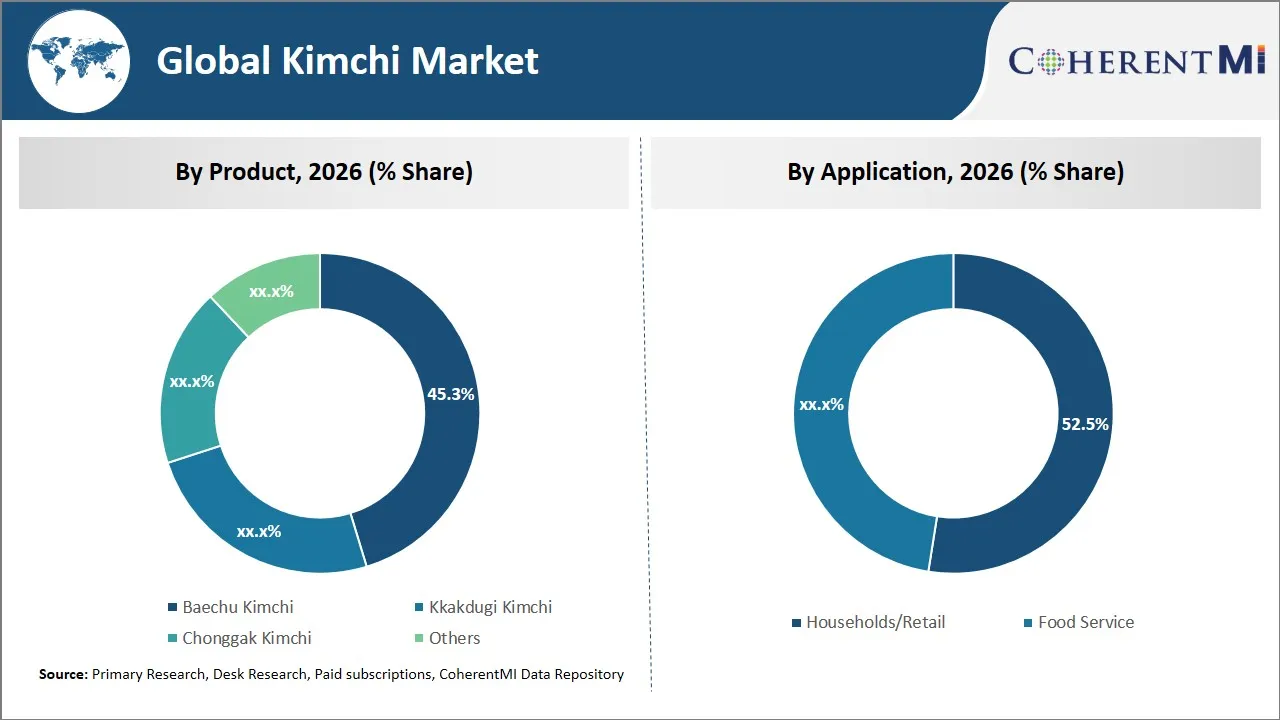
In terms of product, the baechu kimchi segment is expected to contribute 45.3% of the market share in 2026, owing to its status as the quintessential and most recognized form of kimchi globally. The classic napa cabbage-fermented vegetables is the ideal kimchi that most consumers think of when it comes to Korean food, and thus is the logical choice by the consumers of Korea as well as the international individuals in search of fermented foods.
Baechu kimchi’s dominance has been dictated more by its profound cultural meanings and its general acceptability by the diverse consumer groups among consumers. Being the most traditional one, it acts as a product of entry to the consumers who have never tried kimchi, providing a moderate flavor profile that is not too strong or too weak. This convenience has played a very important role in spearheading its market penetration especially in non-Korean markets where consumer familiarity regarding fermented vegetables differ considerably. Its low level of spiciness and the familiarity of its vegetable base makes it a good place to start with the fermented foods in Korea so that one can buy it to enjoy a sample and to continue buying it.
Insights, By Application: Household/Retail Segment Dominates the Growth Convenience Culture and Home Cooking Revival Fuel
The households/retail segment is projected to contribute 52.5% of the market share in 2026, driven by evolving consumer lifestyle patterns and increasing emphasis on home-based food preparation. The increase in home cooking which has been accelerated by the current global affairs and economic factors has made household consumption the most important marketing force in the expansion of the kimchi market.
Convenience factor is essential in dominance in the household/retail segment as busy people will demand ready-to-eat healthy and healthy food that needs minimum time in preparation. Kimchi is a perfect answer since it is healthy and well-balanced, and it does not require many cooking skills or a long preparation time. This convenience factor has especially been very strong with working professionals and urban consumers that are willing to eat real, healthy food although they are time constrained. The fermentation of the product also makes it attractive to the households that are interested in cutting down on the food waste and limit the number of shopping visits.
Fresh vs Shelf-Stable Trade-Off Economics:
|
Factor |
Fresh Kimchi |
Shelf-Stable Kimchi |
|
Production Cost |
High due to shorter shelf life and faster production cycles |
Lower due to the extended shelf life and use of preservatives |
|
Shelf Life |
1–2 weeks (requires refrigeration) |
6 months to 1 year (room temperature storage possible) |
|
Distribution Costs |
Higher due to refrigeration requirements |
Lower, as no refrigeration is needed for storage and transport |
Channel-Wise Demand Shift
|
Channel |
Key Demand Drivers |
Current Trends |
|
Retail |
|
Still dominant, but facing competition from D2C and online platforms. Traditional stores and supermarkets sell refrigerated and shelf-stable kimchi. |
|
Foodservice |
|
Growing demand in restaurants, especially in Asian cuisine and fusion dishes. Increased use in Korean and Asian-inspired menus. |
|
Direct-to-Consumer (D2C) |
|
Rapid growth as brands focus on building direct relationships with customers through their own websites. |
Additional Insights of Kimchi Market
- The North America region operates as the leading market for kimchi products because its diverse customer base has established Korean cuisine as a popular dish while the kimchi brand has gained accessibility through grocery stores and health food stores and online distribution channels.
- Health-conscious consumers drive the development of new kimchi products in North America. Manufacturers create different kimchi products to meet various dietary requirements because people now understand the value of gut health and probiotics. Product innovations now provide customers healthier choices through low-sodium variants and organic and clean-label kimchi and mild or fusion-flavored options that deliver better health benefits than traditional kimchi.
- North American consumers show growing interest in kimchi because of its health advantages. Kimchi functions as a fermented food that delivers both probiotics and lactic acid bacteria, which support digestive health and gut wellness. These advantages parallel the increasing popularity of functional foods that promote complete wellness.
Competitive overview of Kimchi Market
The major players operating in the global kimchi market include Daesang Corporation, CJ CheilJedang Corp., Pulmuone U.S.A., Lucky Foods, Weifang Jiahe Food Co., Ltd, Sinto Gourmet, JONGGA, Choi's Kimchi LLC, NONGSHIM CO., LTD., and Cosmos Food Co., Inc..
Kimchi Market Leaders
- Daesang Corporation
- CJ CheilJedang Corp.
- Pulmuone U.S.A.
- Lucky Foods
- Weifang Jiahe Food Co., Ltd
Recent Developments in Kimchi Market
- In June 2024, Franklin Farms, a division of Keystone Natural Holdings, launched Organic Shredded Kimchi, expanding its plant-based offerings. This new product is crafted with fresh cabbage fermented with onions, garlic, carrots, red chili pepper, and spices, catering to consumers seeking probiotic-rich, vegan, kosher, and gluten-free options. Available at Price Chopper & Market 32 stores in Northeast U.S., Organic Shredded Kimchi is positioned as a versatile condiment ideal for enhancing various cuisines, from burgers and tacos to stir-fried rice.
- In February 2024, Cleveland Kitchen launched Kimchi Pickles in 466 Whole Foods Market stores in the U.S., combining the tangy flavors of kimchi with the crunch of pickles. Positioned as a fusion of culinary traditions, these Kimchi Pickles cater to both pickle enthusiasts and those curious about kimchi, offering a versatile and probiotic-rich option that can be enjoyed on its own or incorporated into various dishes like sandwiches, grain bowls, and pizza.
- In April 2024, Mrs. Elswood, part of the Empire Bespoke Foods portfolio leveraged 75 years of vegetable preservation expertise to launch a new range of Kimchi in three flavors—Classic, Turmeric, and Beetroot—available from April 2024. Embracing Korean cuisine's rising popularity in Britain, these Kimchi offerings are crafted using authentic fermentation methods, resulting in crunchy vegetables with a distinct lactic tang and spicy chili heat.
Kimchi Market Segmentation
- By Product
- Baechu Kimchi
- Kkakdugi Kimchi
- Chonggak Kimchi
- Others
- By Application
- Households/Retail
- Food Service
- By Distribution Channel
- B2C
- Hypermarkets/Supermarkets
- Specialty Food Stores
- Online
- Others
- B2B
- B2C

Would you like to explore the option of buying individual sections of this report?
Shivam Bhutani has 6 years of experience in market research and strategy consulting. He is a Market Research Consultant with strong analytical background. He is currently an MBA candidate specializing in Business Analytics from BITS Pilani.
He is adept at navigating diverse roles from sales and marketing to research and strategy consulting. He excels in market estimation, competitive intelligence, pricing strategy, and primary research. He is skilled at analysing large datasets to provide precise insights, helping clients in achieving strategic transformation across various industries. He is skilled in leveraging data visualization techniques to drive innovation and enhance business processes.