Vegan Protein Bars Market SIZE AND SHARE ANALYSIS - GROWTH TRENDS AND FORECASTS (2026 - 2033)
Vegan Protein Bars Market is segmented By Nature (Organic, Conventional), By Flavor (Chocolate-Vanil...
Vegan Protein Bars Market Size - Analysis
The global vegan protein bars market is estimated to be valued at USD 1.88 Bn in 2026 and is expected to reach USD 6.16 Bn by 2033, exhibiting a compound annual growth rate (CAGR) of 18.5% from 2026 to 2033. This remarkable growth trajectory reflects the increasing consumer shift toward plant-based nutrition and the rising awareness of health and wellness benefits associated with vegan protein consumption.
Market Size in USD Bn
CAGR18.50%
| Study Period | 2026 - 2033 |
| Base Year of Estimation | 2025 |
| CAGR | 18.50% |
| Market Concentration | Medium |
| Major Players | Clif Bar & Company, Kind LLC, RXBAR, LÄRABAR, Vega, Pure Protein and Among Others |

please let us know !
Vegan Protein Bars Market Trends
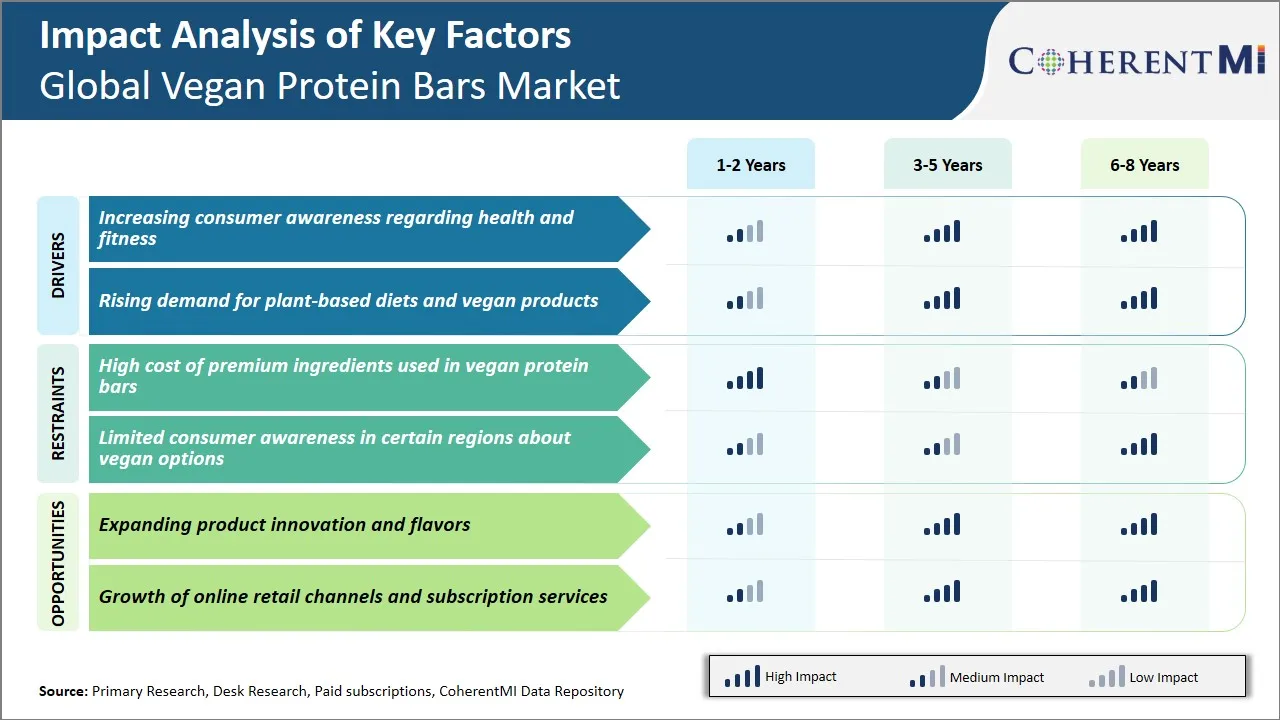
Market Driver - Increasing Consumer Awareness Regarding Health and Fitness
The modern world of consumer behavior has experienced a significant shift in the way people have understood and valued their health and wellness life. This is not just a transient fashion but a long-lasting change of life style that has a direct effect on buying habits of people in different kind of products, especially in the food and nutrition category. The contemporary consumers are becoming more and more informed on the complexity involving the relationship between food consumption and long-term health consequences, and thus the selection of food is becoming a more critical concern.
Market Driver - Rising Demand for Plant-Based Diets and Vegan Products
Plant-based nutrition is one of the most important changes in the nutrition of the modern world, which radically changes the consumerist expectations and market relations in the food industry. This is not merely a dietary preference movement, but a broad-based lifestyle philosophy which values environmental sustainability, animal welfare, and personal health maximization. The increased popularity of vegetarianism is an indicator of advanced knowledge of nutrition science, environmental footprint, and ethical eating that has infiltrated popular consumer mindsets.
 To learn more about this report, Request Free Sample Copy
Market Challenge - High Cost of Premium Ingredients Used in Vegan Protein Bars
Increased costs of raw materials especially premium sources of plant-based proteins and organic ingredients are one threat that is considerably strong in the global vegan protein bars industry. Exceptional vegan sources of protein like pea protein isolate, hemp protein, and sprouted grain proteins tend to be very expensive, priced 3,050 percent higher than regular whey protein. This price difference is driven by the lack of suppliers, complicated extraction operation and reduced economies of scale in plant protein production. Also, manufacturers have been driven by clean-label ingredient requirements into organic nuts, organic seeds, and increasingly popular superfoods such as chia, quinoa, and spirulina that represent high-end products because of specialized farming techniques and certification needs.
Market Opportunity - Expanding Product Innovation and Flavors for Market Growth
Growth opportunities in the vegan protein bars market are high due to the product innovation and diversification ventures in taste and flavor. The preferences of consumers are quickly shifting away from conventional chocolate and vanilla products, and exotic and culturally-inspired taste profiles, such as matcha green tea, turmeric golden milk, Mediterranean fig, and localized fruit blends, have room to arrive. This is a growing trend in line with the overall trend of premiumizing health foods and the readiness of consumers to explore new taste sensations. Developers of limited-edition seasonal flavors, collaboration products with major food brands, and culturally-specific products aimed at different demographic segments can be used by the manufacturers to take advantage of this opportunity.
Key winning strategies adopted by key players of Vegan Protein Bars Market
- Product Innovation: The players are fiercely introducing taste, texture, and nutrition innovation by introducing new flavors, high-protein, low-sugar, and allergen-free choices. The brands are not simply delivering protein but bars have added fiber, probiotics, adaptogens and functional superfoods.
- Market Expansion: Firms are moving fast into high growth markets like Asia Pacific, Latin America, and the Middle East and using the increasing veganism, urban fitness culture, and the development of modern retail. E-commerce across borders and alliances with local distributors are increasing the rate of market penetration.
- Sustainability & Clean-Label Positioning: Sustainability is a fundamental distinction, and the brands will embrace recyclable/compostable packaging, sustainably sourced plant proteins, clear claims on clean labels. The reduction of the carbon footprint, minimal processing, and ethical sourcing are all being employed to gain the loyalty of the health- and eco-conscious consumers.
Segmental Analysis of Vegan Protein Bars Market
 To learn more about this report, Request Free Sample Copy
Organic Segment Dominates the Vegan Protein Market Due to Conscious Consumer Preferences and Premium Positioning
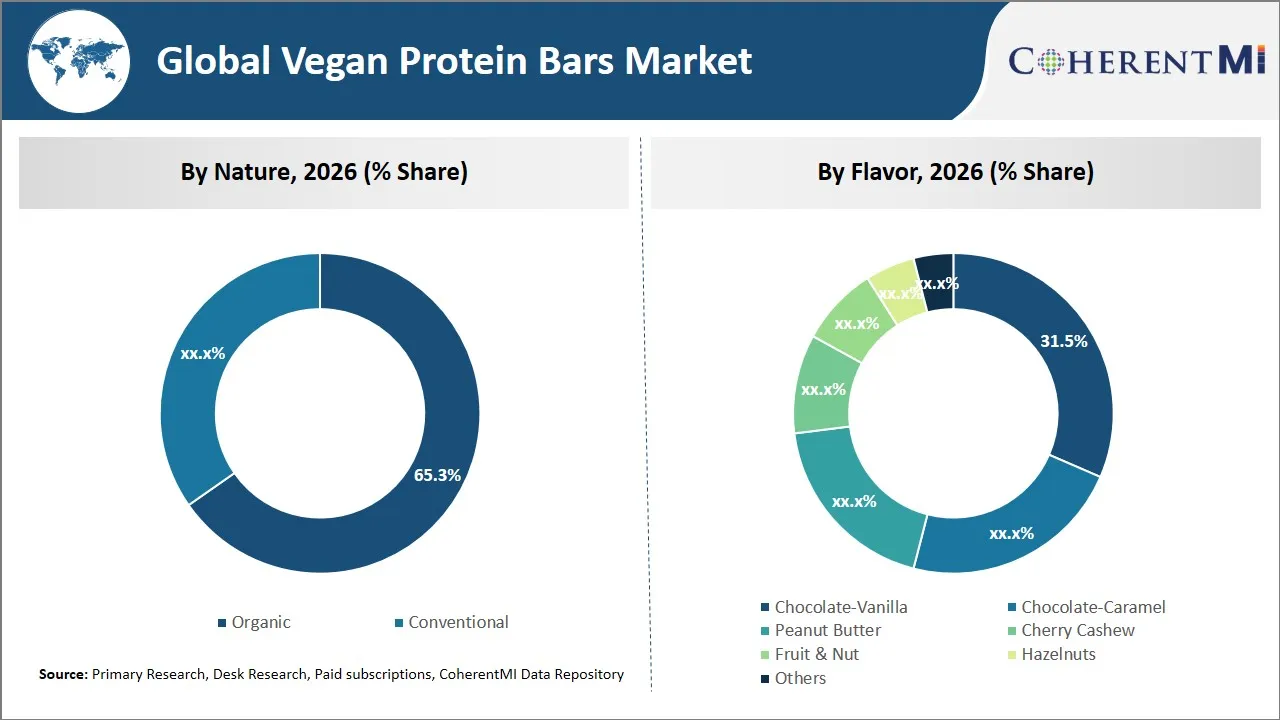
The organic segment is expected to capture 65.3% share in 2026, because of the growing consumer awareness about the health value and environmental sustainability linked with using organic food products. The leadership position of the organic segment is grounded in several factors that are united and are especially appealing to the target audience of vegan protein bars consumers.
The main force which has led to the dominance of organic vegan protein bars in the market is the increased health awareness among consumers who go out of their way to buy those products that do not contain artificial pesticides, herbicides, and genetically modified organisms. This group is often represented by fitness enthusiasts, health-conscious millennials, and people living a plant-based lifestyle with a focus on clean eating and ready to spend money on high-quality products that would fit their health objectives.
Chocolate-Vanilla Dominates the Vegan Protein Market due to its Universal Appeal and Versatility
Chocolate-vanilla segment is projected to hold 31.5% of the market share in 2026, because of its universal appeal, known taste profile, and better sensory satisfaction which is not limited with any demographic lines. The chocolate-vanilla one is a traditional flavor mix that has been effective in balancing the indulgence and nutrition, and thus it is the most favorable by different consumer groups.
The very motivation that has enabled chocolate-vanilla to dominate the market is the wide range of demographics. In contrast to more committed flavors that can provide a taste experience that is tailored to the particular taste preferences, chocolate-vanilla presents a familiar and soothing taste experience that is acceptable by both curious food consumers and less open consumers who switch to plant-based options. This generality is especially relevant to the vegan protein bars market, where brands are aiming to appeal to the committed vegans and flexitarians who may be considering the plant-based option.
Protein Source Preference & Performance
|
Protein source (base) |
Key performance strengths |
Strengths Key trade-offs/rejection triggers |
|
Pea protein |
High protein density, good satiety |
Beany notes, dryness/chalkiness if poorly masked |
|
Brown rice protein |
Mild taste, easier blending |
Lower lysine, can be gritty |
|
Chickpea protein |
Good flavor compatibility |
Can be dense/pasty |
Additional Insights of Vegan Protein Bars Market
- Asia Pacific Dominance: Asia Pacific dominates the vegan protein bars market because it boasts a substantial number of consumers, who are fitness-oriented, vegan, and flexitarian, the prevalence of plant-based diets, and well-established brands of sports nutrition and functional snacks.
- Vegan Protein Bar Innovation: Due to the increasing demand of clean-label, allergen-free, and low-sugar nutrition, manufacturers have increased their product innovation efforts in vegan protein bars, with increased interest in organic ingredients, natural sweeteners, pea/soy/rice protein blends, and functional features.
- Functional nutrition & plant-based health positioning vegan protein bars are increasingly being framed as functional food, with a particular focus on muscle recovery, sustained energy, gut health (fiber, prebiotics), and heart health and this is consistent with the broader trends in preventive nutrition and active lifestyles.
Competitive overview of Vegan Protein Bars Market
The major players operating in the global vegan protein bars market include Clif Bar & Company, Kind LLC, RXBAR, LÄRABAR, Vega, Pure Protein, No Cow, Orgain, Garden of Life, Quest Nutrition, GOLEAN, Health Warrior, and One Brands.
Vegan Protein Bars Market Leaders
- Clif Bar & Company
- Kind LLC
- RXBAR
- LÄRABAR
- Vega
- Pure Protein
Recent Developments in Vegan Protein Bars Market
- In 2024, Clif Bar & Company launched the CLIF Builders Plant Protein+ with probiotics and B12; in 2025, rolled out oat- and lentil-protein bars for endurance athletes.
- In 2024, RXBAR (Kellogg’s) introduced its first fully vegan RXBAR with pea protein and dates; in 2025, launched vegan RX Minis for portion-controlled snacking.
Vegan Protein Bars Market Segmentation
- By Nature
- Organic
- Conventional
- By Flavor
- Chocolate-Vanilla
- Chocolate-Caramel
- Peanut Butter
- Cherry Cashew
- Fruit & Nut
- Hazelnuts
- Others
- By Ingredient Type
- Soy
- Pea
- Nuts
- Hemp
- Others
- By Distribution Channel
- Online Retail
- Offline Retail
- Supermarkets/Hypermarkets
- Health Food Stores
- Fitness Centers

Would you like to explore the option of buying individual sections of this report?
Sakshi Suryawanshi is a Research Consultant with 6 years of extensive experience in market research and consulting. She is proficient in market estimation, competitive analysis, and patent analysis. Sakshi excels in identifying market trends and evaluating competitive landscapes to provide actionable insights that drive strategic decision-making. Her expertise helps businesses navigate complex market dynamics and achieve their objectives effectively.