Protein Snacks Market SIZE AND SHARE ANALYSIS - GROWTH TRENDS AND FORECASTS (2026 -2033)
Protein Snacks Market is segmented By Product Type (Protein Bars, Protein Chips, Protein Cookies, Je...
Protein Snacks Market Size - Analysis
The global protein snacks market is estimated to be valued at USD 8.45 Bn in 2026 and is expected to reach USD 13.93 Bn by 2033, exhibiting a compound annual growth rate (CAGR) of 7.4% from 2026 to 2033. This robust growth trajectory reflects the increasing consumer shift toward healthier snacking alternatives and the rising awareness of protein's role in maintaining optimal nutrition.
Market Size in USD Bn
CAGR7.4%
| Study Period | 2026 -2033 |
| Base Year of Estimation | 2025 |
| CAGR | 7.4% |
| Market Concentration | Medium |
| Major Players | Nestlé S.A., Quaker Oats Company, General Mills, PepsiCo Foods, Kellogg’s Co. and Among Others |

please let us know !
Protein Snacks Market Trends
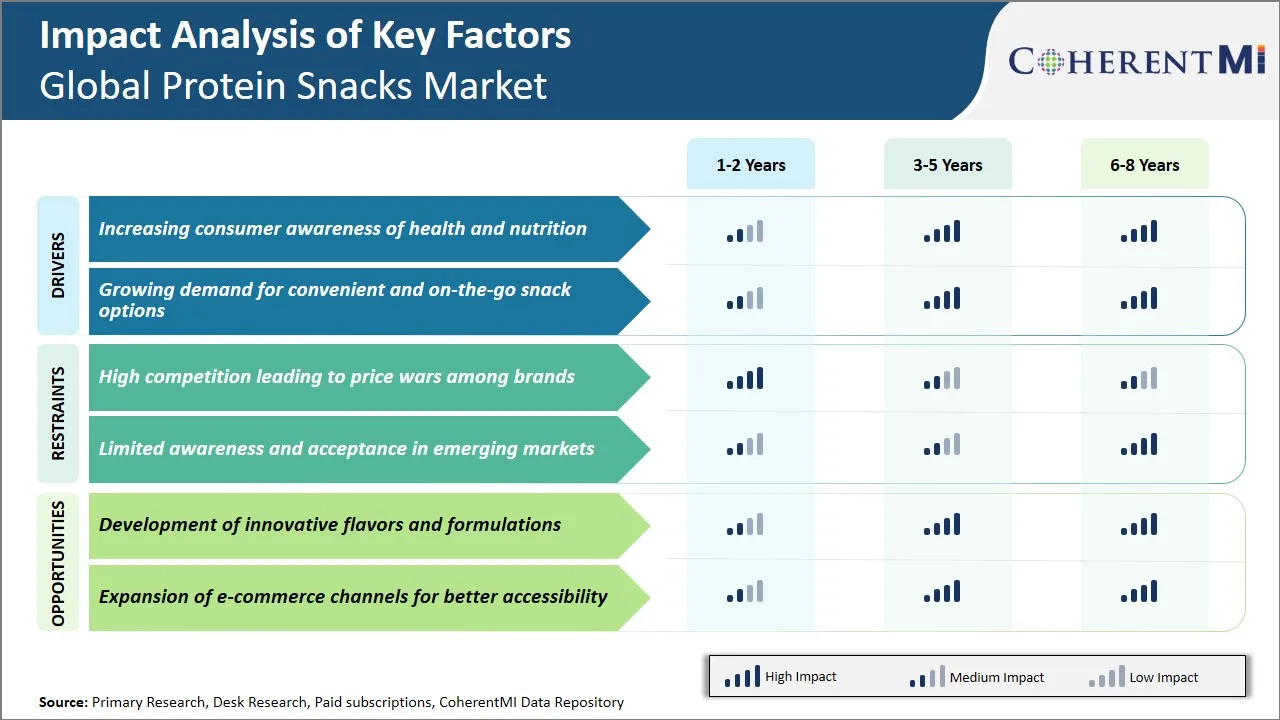
Protein Snacks Market Driver - Increasing Consumer Awareness of Health and Nutrition
The protein snacks market in the world is growing at unprecedented rates due to a paradigm shift in the consumer awareness in terms of health and nutrition. This transformation is not merely a flash craze but a wholesome way of living where consumers are now aggressively looking towards foods that are compatible to their wellness objectives and nutritional needs. The increased level of awareness is a result of a set of factors that are interdependent and have redefined the buying patterns and food preferences among the various demographic groups. The contemporary consumer is becoming better informed regarding the importance of macronutrients in their everyday diet, and functional protein comes out as one of the pillars of the healthy eating habits.
For example, snack brands such as Quest Nutrition and RXBAR have taken advantage of this movement by introducing an extensive selection of high-protein protein bars, chips and shakes that meet the increasing demand of high-protein snacks. An example is Quest Nutrition which has dominated the protein snack market by becoming one of the top brands that not only contain high quantities of alternative protein but are also without any added sugars and other artificial additives.
Market Driver - Growing Demand for Convenient and On-the-Go Snack Options
The changing demands of the modern lifestyle have fundamentally altered the way people snack, generating a market prospective in the form of protein snacks that will satisfy the requirements of the consumers to find easy to carry nutrition items. Modern life is marked by the growing busyness, longer working days, longer road journeys, and the overall speeding up of the activities of everyday life which do not allow much time to prepare and eat traditional meals. This fact has made convenient snacking not only a preference of millions of consumers, but also a need since all of them need to have access to nutrition solutions that can comfortably fit into their busy schedules. The idea of convenience in the protein snacks market is much more multidimensional than portability to include such aspects as the innovation in packaging and shelf stability, ease of use, no mess, food consumption, and nutritional completeness that may potentially fill the gaps between meals or may be used as quick sources of energy in the face of demanding schedules.
 To learn more about this report, Request Free Sample Copy
Market Challenge - High Competition Leading to Price Wars Among Brands
The global protein snacks market faces a formidable challenge in the form of escalating price wars driven by fierce competition among established brands and emerging players. With the market getting more and more crowded with dozens of protein bar, jerky, and protein chip producers competing to win the interest of consumers, businesses are turning to price-cutting measures to keep consumers and gain some of the price-sensitive ones. This competitive force especially in the mass retail segment where major retailers are offering products under their own labels at 20-30 percent less than branded products has caused other competitors to offer less so that they could compete.
Market Opportunity - Innovation-Driven Market Expansion Through Novel Flavors and Formulations
Innovative flavors and development of new formulations is one of the key growth opportunities that the manufacturers of protein snacks can seize to make a differentiation in the products and capture the emerging groups of consumers. Due to the increased sophistication and adventurous behavior of health-conscious consumers when it comes to their snacking preferences, products that have functional ingredients and provide an exciting taste experience in addition to nutritional benefits have high demand. The opportunity is not limited to old-fashioned vanilla and chocolate but covers globally-inspired products like Korean BBQ, herbs mixes, and Latin American spice mixes, which will be priced high but will be attractive to the wide demographics.
Key winning strategies adopted by key players of Protein Snacks Market
- Product Innovation: Firms are working on high-protein snacks that are made using special ingredients, flavors, and package formulations to meet the increasing health-related customers. Vegan and vegetarian markets were accessed by brands like Quest Nutrition that added new lines to their product offerings, including high-protein bars with superfoods and vegan and plant-based protein snacks.
- Focus Health and Wellness: The increasing demand of functional foods is making players pay attention to protein snacks, which have added health benefits like immunity boosting benefits, low sugar level and digestive benefits. As an example, RXBAR can be referred to as the companies that are enriching their protein items with clean, simple ingredients and no added sugar to appeal to the health-conscious customers.
- Geographical Market Growth: The companies are broadening geographically, especially to the emerging market where the snacks based on proteins are becoming common. Indicatively, companies such as MyProtein have aggressively gone international to Asia and Latin America where the demand on snacks that are fitness-oriented is on the increase.
Segmental Analysis of Protein Snacks Market
 To learn more about this report, Request Free Sample Copy
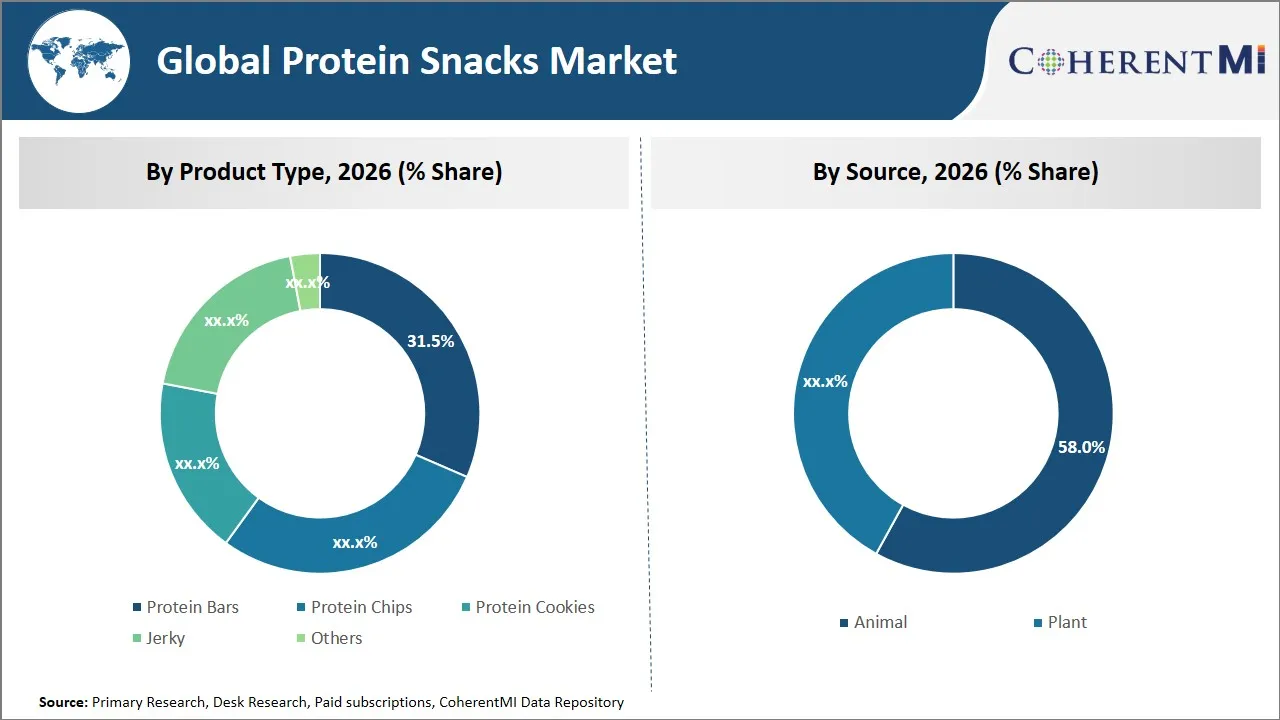
Insights, By Product Type: Protein Bars Drive Market Leadership Through Enhanced Convenience and Nutritional Innovation
In terms of product type, the protein bars segment is expected to contribute 31.5% of the protein snacks market share in 2026, owing to their exceptional convenience factor and superior nutritional profile that perfectly aligns with modern consumer lifestyles. Protein bars have gained dominance due to their ready to eat nature, which does away with the preparation time thus making them a perfect product when it comes to busy people, sports people and health wise consumers that need to have a quick bite.
The market leadership of protein bars heavily relies on the portability advantage that they have. Contrary to other protein snack products, bars can be conveniently stored in purses, gym bags, brief cases or trunk without having to maintain special storage habits or to make a mess. This is due to the convenience factor that has made protein bars, the meal replacement option, before or after gym, a meal and emergency hunger fix during traveling or excessive working hours.
Insights, By Source: Animal-Based Proteins Maintain Supremacy Through Complete Amino Acid Profiles and Consumer Familiarity
Animal segment is expected to contribute 58% of the market share in 2026, owing to their superior biological value and complete amino acid profiles that effectively support muscle development and recovery needs. The prevalence of animal-based sources of proteins indicates their strong reputation among fitness enthusiasts and health-conscious consumers who have a strong emphasis on the quality and bioavailability of protein sources in comparison to their plant-based counterparts.
The overall amino acid content benefit is the reason why consumers are more likely to prefer animal protein. Animal proteins including whey, casein and collagen contain all nine essential amino acids in optimal proportions to the human metabolism, unlike most of the plant proteins who lack some of the essential amino acids. This is an appeal of biological wholeness especially to the serious athlete, the bodybuilder, and to the person on a high protein diet who needs his protein in all its nutritional efficiency.
Incremental revenue per functional claim
|
Functional Claim |
Description |
Revenue Uplift (%) |
Key Drivers for Uplift |
|
High Protein + Low Sugar |
Combines high protein content and reduced sugar levels. |
15-20% |
Health-conscious consumers, muscle recovery, weight management |
|
Plant-Based |
Products made without animal products, using plants only. |
8-12% |
Rising demand for vegan and plant-based diets. |
|
Gluten-Free |
Products without gluten, suitable for gluten-sensitive consumers. |
6-10% |
Increasing awareness of gluten intolerance and celiac disease. |
Additional Insights of Protein Snacks Market
- North America continues to lead the protein snacks market, driven by a highly health-conscious population, the widespread adoption of fitness culture, and strong demand for convenient, high-protein, on-the-go snacks among busy professionals and fitness enthusiasts.
- Health-Conscious Consumers Driving Product Innovation: Increasing awareness of healthy eating habits and nutritional benefits has led to the development of a wide variety of protein snacks, including plant-based, keto-friendly, and gluten-free options, forcing manufacturers to continually innovate and meet the growing demand for health-conscious products.
- High-Protein Trend in Snacking: With rising consumer interest in high-protein diets for muscle building and weight management, protein-packed snacks such as bars, chips, and jerky are gaining popularity, pushing brands to diversify their offerings to include more flavors, ingredients, and convenient formats.
Competitive overview of Protein Snacks Market
The major players operating in the global protein snacks market include Nestlé S.A., Quaker Oats Company, General Mills, PepsiCo Foods, Kellogg’s Co., The Hershey Company, Mondelez International, Abbott Nutrition, Unilever, Mars Incorporated, Hormel Foods Corporation, and B&G Foods, Inc.
Protein Snacks Market Leaders
- Nestlé S.A.
- Quaker Oats Company
- General Mills
- PepsiCo Foods
- Kellogg’s Co.
Recent Developments in Protein Snacks Market
- In May 2025, MrBeast joined hands with Jack Link’s to introduce a co-branded range of high-protein snacks, extending his footprint in the food industry. The new MrBeast x Jack Link’s range marked the YouTube megastar’s first partnership with a Consumer-Packaged Goods (CPG) company. The product will be available across the globe later this year.
- In May 2025, Bel UK declared the launch of Mini Babybel Protein to meet the rising consumer demand for protein-rich diets. The new product packs 5.2 grams of natural protein per portion and focuses on catering to the surging demand for functional, convenient snacks that fit into busy lifestyles.
- In November 2024, Mr. Ranveer Singh, a renowned film star, announced the launch of SuperYou, a protein food and supplements brand co-founded with Mr. Nikunj Biyani. The brand unveiled India’s first-ever protein wafer bar by utilizing fermented yeast protein technology to provide an enjoyable yet nutritious snack.
Protein Snacks Market Segmentation
- By Product Type
- Protein Bars
- Protein Chips
- Protein Cookies
- Jerky
- Others
- By Source
- Animal
- Plant
- By Distribution Channel
- Supermarkets and Hypermarkets
- Convenience Stores
- E-commerce
- Others

Would you like to explore the option of buying individual sections of this report?
Kalpesh Gharte is a senior consultant with approximately 5 years of experience in the consulting industry. Kalpesh holds an MBA in Operations and Marketing Management, providing him with a strong foundation in market strategy and analysis. He has contributed to various consulting and syndicated reports, delivering valuable insights that support informed business decisions