Triple X Syndrome Market SIZE AND SHARE ANALYSIS - GROWTH TRENDS AND FORECASTS (2026 - 2033)
Triple X Syndrome Market is segmented By Type (Classic Triple X Syndrome, Mosaic Triple X Syndrome, ...
Triple X Syndrome Market Size - Analysis
The global Triple X syndrome market is projected to reach USD 320.5 Mn by 2033, exhibiting a CAGR of 13.9% from USD 128.9 Mn in 2026. This growth reflects the rising recognition and diagnosis of Triple X syndrome, a genetic condition affecting roughly 1 in 1,000 females. Key drivers include advancements in genetic screening, enhanced healthcare infrastructure, increased awareness among healthcare professionals, and rising investments in rare disease research. Additionally, emerging technologies like genome editing may play a significant role in accelerating treatment development, further contributing to market expansion.
Market Size in USD Mn
CAGR13.9%
| Study Period | 2026 - 2033 |
| Base Year of Estimation | 2025 |
| CAGR | 13.9% |
| Market Concentration | High |
| Major Players | Novartis AG, F. Hoffmann-La Roche Ltd, Pfizer Inc, Bristol Myers Squibb, GlaxoSmithKline plc and Among Others |

please let us know !
Triple X Syndrome Market Trends
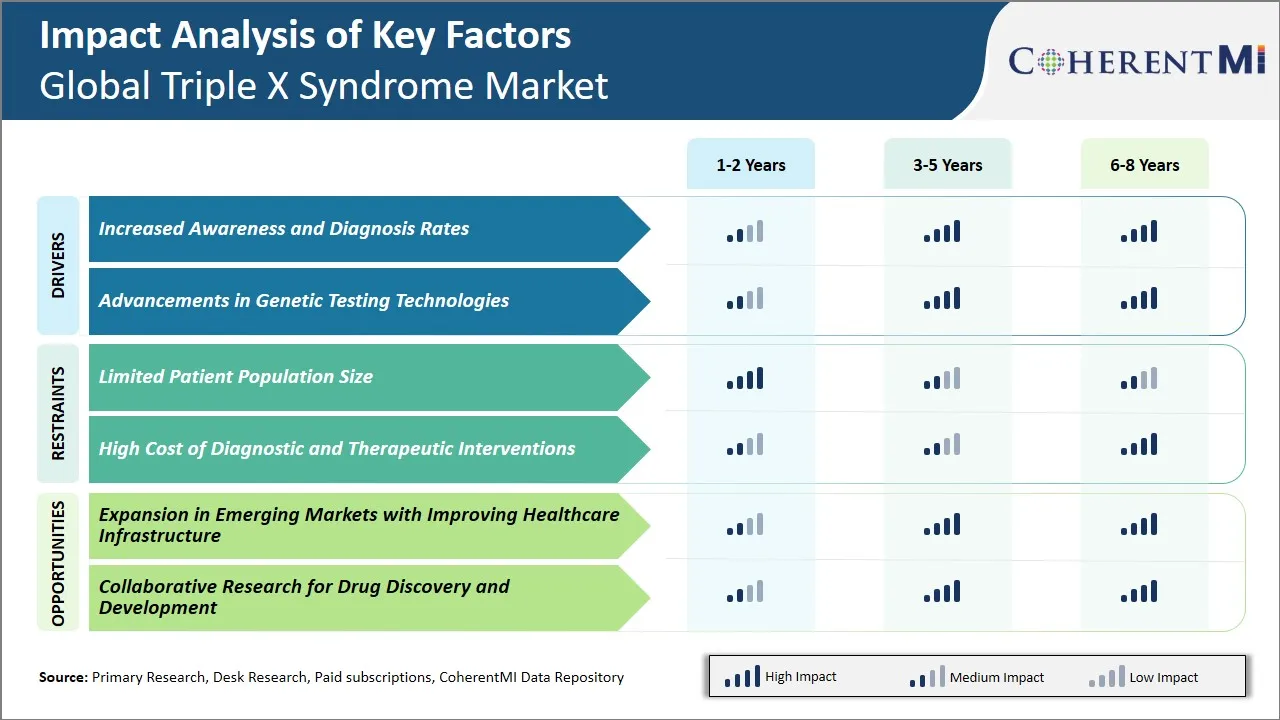
Market Driver - Increased Awareness and Diagnosis Rates
The increased recognition and the higher rates of diagnosis of triple X syndrome is one of the essential forces that drive the market of the entire world forward and would essentially transform the manner in which healthcare providers, patients and families deal with this genetic disorder. Medical workers of different specialties such as pediatrics, endocrinology, genetics, and reproductive medicine have now greatly extended their knowledge on the clinical presentation and the long-term consequences of triple X syndrome. This increased awareness has come about by the way of overall medical education campaigns, professional conferences, peer-reviewed publications on research, and by working together between medical institutions and patient advocacy groups. The syndrome (a female-specific abnormality marked by the supernumerary X chromosome) has mild symptoms which had been either ignored historically or confused with other developmental or behavioral disorders.
For instance, in April 2025, according to National Organization for Rare Disorders, Inc., Triple X syndrome, also known as trisomy X, is a genetic condition where females have three X chromosomes instead of two. It affects about 1 in 1,000 females, with symptoms ranging from mild to more pronounced, including developmental delays, learning disabilities, and physical abnormalities. Diagnosis is made through genetic testing, and while there’s no cure, early intervention with therapies can help manage symptoms. Most affected individuals can live healthy lives with appropriate support.
(Source: https://rarediseases.org/rare-diseases/trisomy-x/)
Market Driver - Advancements in Genetic Testing Technologies
Genetic testing technologies have revolutionized the diagnosis and management of both Triple X syndrome and Down syndrome, offering unprecedented opportunities for efficient, accurate, and accessible chromosomal analysis. Modern molecular genetic methods, which surpass traditional cytogenetic techniques, have significantly improved the accuracy, speed, and consistency of diagnosing chromosomal abnormalities, including the additional X chromosome in Triple X syndrome and the extra chromosome 21 in Down syndrome. Current genetic testing systems provide detailed chromosomal examination with quicker turnaround times, higher resolution, and greater cost-efficiency compared to traditional karyotyping technologies.
Chromosomal microarray analysis has become a specifically potent diagnostic test and has made genomic information available which is far above the simple chromosomal count into the island of subtle structural changes, copy number change and areas of genomic instability which might be involved in the clinical manifestation found in patients with triple X syndrome. The technology will allow clinicians to gain a deeper insight into the genetic profile of each patient and help in developing a more personalized approach to management and improving the accuracy of a prognostic assessment.
 To learn more about this report, Request Free Sample Copy
Market Challenge - Limited Patient Population Size
A naturally small number of patients limits the growth potential and commercial feasibility of the market. Triple X syndrome or trisomy X is a genetic condition that is identified in about 1 in 1000 female births in the world; hence, it leaves behind a relatively low number of patients to address as compared to other genetic illnesses that are more dominant. This low prevalence poses significant obstacles to the pharmaceutical firms and medical equipment producers in developing specific therapies and diagnostic agents.
The low number of patients represented is economically limiting and cannot warrant committing huge sums of money on research and development since the results of the investment are limited by the small market size. The small number of patients, also makes it difficult to conduct clinical trials and perform them, which lengthens the development process and makes it significantly more expensive on a per-patient basis. The undiagnosed or misdiagnosed patients having triple X syndrome are because of subtle symptoms, and this diminishes the number of patients who can be identified to undergo treatment.
Market Opportunity - Expansion in Emerging Markets with Improving Healthcare Infrastructure
Global triple X syndrome market has tremendous growth potential due to the presence of emerging markets whereby the ever-increasing levels of healthcare are being introduced to provide better diagnosis and accessibility to specialized genetic services to patients. Asia Pacific countries, Latin America, and some parts of Africa are witnessing high levels of investment in healthcare modernization, such as the introduction of high-end genetic testing laboratories, specialized children centers and telemedicine systems which can be used to help in early detection and treatment of rare genetic conditions such as triple X syndrome. These new markets are characterized as relatively untapped sources of patient with new demand created by the growing number of patients with greater awareness of healthcare, growing disposable incomes and the growing coverage of insurance.
For example, Kaerus Bioscience has targeted markets in Europe and the U.S. for its triple X treatment and is looking to expand in regions with growing healthcare capacities.
Merck & Co. continues to expand its presence in Latin America, investing in local healthcare systems, while pushing for greater access to treatments like its HPV vaccines.
(Source: https://www.kaerusbio.com/)
Prescribers preferences of Triple X Syndrome Market
Executive Summary
Triple X Syndrome (Trisomy X) is a chromosomal condition affecting females, characterized by an extra X chromosome. This report analyzes prescriber preferences across treatment stages and therapeutic approaches.
Treatment Framework
- Primary Management Stage
Prescribers typically focus on symptomatic management rather than curative treatment, as Triple X Syndrome lacks specific pharmaceutical interventions targeting the chromosomal abnormality itself.
First-Line Treatments:
- Learning difficulties: Stimulants like methylphenidate (Ritalin, Concerta) or amphetamine salts (Adderall)
- Anxiety disorders: SSRIs including sertraline (Zoloft) or escitalopram (Lexapro)
- Motor coordination issues: Occupational therapy support with potential gabapentin (Neurontin) for associated discomfort
- Secondary Management Stage
Hormonal considerations:
- Delayed puberty: Estrogen replacement therapy using estradiol (Estrace) or conjugated estrogens (Premarin)
- Fertility support: Clomiphene citrate (Clomid) or letrozole (Femara)
- Influencing Factors
Key prescriber preferences are influenced by:
- Patient age and developmental stage
- Severity of symptoms
- Comorbid conditions
- Family history and genetic counseling results
- Multidisciplinary team recommendations
Regional variations exist based on specialist availability and healthcare system protocols. Prescribers emphasize individualized treatment plans focusing on quality of life improvement rather than standardized pharmaceutical protocols.
Treatment Option Analysis of Triple X Syndrome Market
Treatment Options Analysis for Triple X Syndrome
Disease Overview & Stages
Triple X Syndrome (47,XXX) is a chromosomal condition affecting females with an extra X chromosome. The condition presents across three developmental stages:
- Early Childhood (0-5 years): Delayed motor and speech development
- School Age (6-17 years): Learning difficulties and behavioral challenges
- Adulthood (18+ years): Reproductive and psychological concerns
Treatment Approaches by Stage
- Early Intervention (First-Line)
- Speech Therapy: No specific medications; focus on developmental support
- Physical Therapy: For motor skill enhancement
- Educational Support: Individualized Education Programs (IEPs)
- Rationale: Early intervention maximizes developmental potential during critical neuroplasticity periods.
- Symptomatic Management (Second-Line)
1. Learning Disabilities:
-
- Stimulants: Methylphenidate (Ritalin, Concerta)
- Non-stimulants: Atomoxetine (Strattera)
2. Anxiety/Depression:
-
- SSRIs: Sertraline (Zoloft), Fluoxetine (Prozac)
- Combination therapy with cognitive behavioral therapy
- Rationale: Addresses comorbid ADHD (60% prevalence) and anxiety disorders common in Triple X patients.
- Hormonal Considerations (Third-Line)
- Reproductive Health: Hormone replacement therapy if indicated
- Brands: Estradiol patches (Climara), Combined oral contraceptives
- Rationale: Some patients experience early menopause or irregular cycles requiring hormonal support.
Treatment Selection Criteria
Treatment choice depends on symptom severity, age, and individual patient response. Multidisciplinary approaches combining educational, psychological, and medical interventions show optimal outcomes. Regular monitoring ensures appropriate treatment modifications as patients progress through developmental stages.
- Comorbidity Burden in Triple X Syndrome: Triple X syndrome (trisomy X) is often associated with a lower comorbidity burden, as many individuals show mild or no symptoms. However, some may experience developmental delays, learning disabilities, and behavioral issues, which can coexist with conditions like ADHD, autism, and anxiety. As individuals age, the risk of comorbidities increases, particularly in fertility and mental health, with some facing fertility challenges and higher rates of anxiety and autism spectrum disorders. Addressing these comorbidities is essential for improving quality of life and providing comprehensive care for those with Triple X syndrome.
- Care Pathway Fragmentation in Triple X Syndrome: Care pathway fragmentation arises from the varying severity of symptoms and the lack of specific treatment protocols. While some individuals may need minimal intervention, others require a multidisciplinary approach, including speech therapy, physical therapy, and behavioral support. The absence of a clear diagnostic and treatment framework further exacerbates this fragmentation, as many cases go undiagnosed due to mild or absent symptoms. As a result, families and caregivers face difficulties accessing coordinated care, leading to inconsistent support and delays in addressing developmental or behavioral issues. Streamlining care pathways is crucial for improving outcomes and ensuring effective treatment for individuals with Triple X syndrome.
Segmental Analysis of Triple X Syndrome Market
 To learn more about this report, Request Free Sample Copy
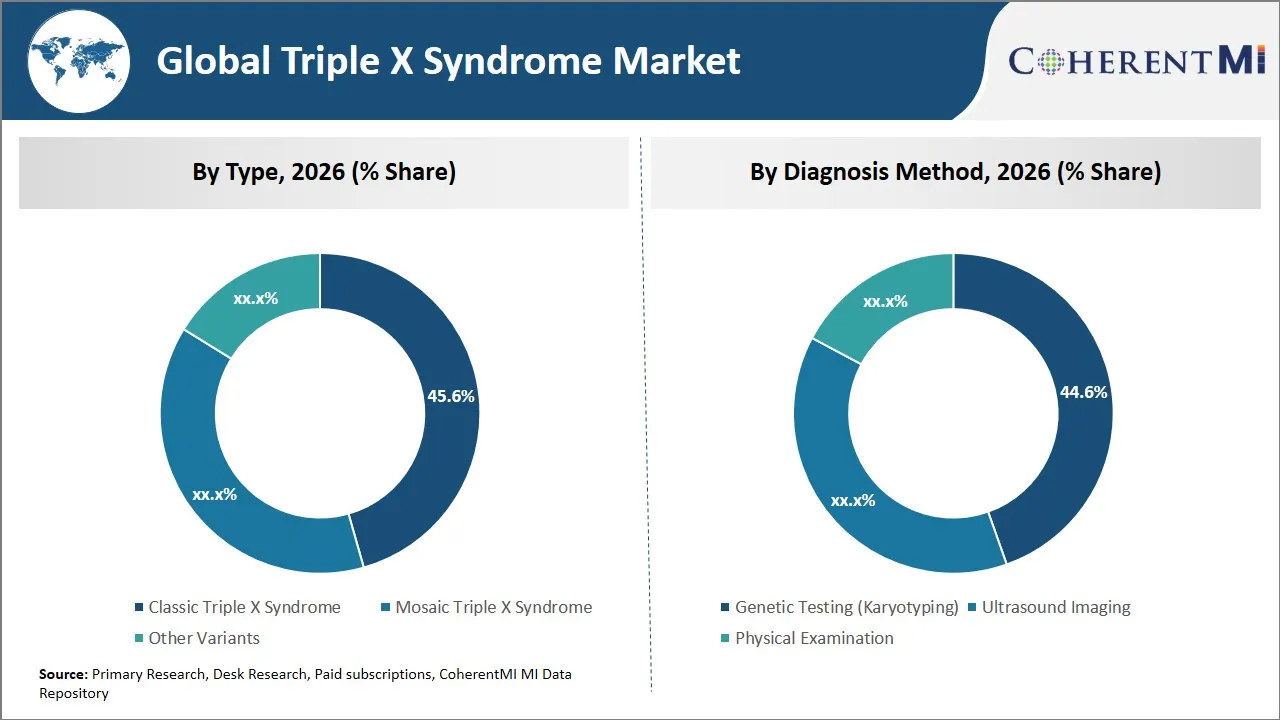
Insights, By Type - Classic Triple X Syndrome’s Dominance Driven by High Prevalence and Established Clinical Recognition
By type, classic triple X syndrome will have the strongest market share of 45.6% in 2026, because it has a much higher prevalence than other forms of the syndrome and the established patterns of clinical recognition. The most common chromosomal arrangement that is most frequently represented in clinical practice is the classic triple X syndrome where all cells have an extra X chromosome (47,XXX). This full trisomy condition X is found in about 1 of every 1,000 births of female, which is significantly greater than the prevalence of mosaic forms or other rare forms.
Classic triple X syndrome has dominated the market relatively because it has a stable manifestation in affected persons and this has resulted in uniform patterns of diagnostic procedures and treatment methodologies. The classic phenotype, which has such specific features as tall stature, learning disorders, and developmental delays, is better known to healthcare providers, and, therefore, more accurately identified and further demanded on the market in terms of diagnostic services and therapeutic interventions.
Insights, By Diagnosis Method - Genetic Testing’s (Karyotyping) Leadership Fueled by Definitive Diagnostic Accuracy and Clinical Standard Requirements
Regarding diagnosis method, genetic testing (karyotyping) would take the largest proportion of the market with 44.6% share in in 2026, due to the fact that it is the gold standard of chromosomal analysis, and its accuracy in affirming the diagnosis of triple X syndrome is unmatched. Karyotyping is the ultimate cytogenetic investigation needed to determine the existence of supernumerary X chromosome, which is necessary in precise diagnosis and classification of the syndrome. Such chromosomal analysis method is the most valid means of separating classic and mosaic varieties of triple X syndrome that is important in planning appropriate treatment and determine prognosis.
Genetic testing dominance in the market based on karyotyping is fueled by the growing awareness of healthcare providers on the insidious nature of triple X syndrome which in many cases needs to undergo chromosomal confirmation as opposed to clinical observation alone. The genetic testing is crucial to differentiate between the affected and other conditions as a large number of the affected individuals might have mild or non-specific symptoms that can be confused with the other conditions.
Additional Insights of Triple X Syndrome Market
- By type, classic triple X syndrome is expected to hold the largest market share at 45.6% in 2026.
- By diagnosis method, genetic testing (karyotyping) is expected to account for the highest share at 44.6% in 2026.
- By treatment type, symptomatic treatment leads the market with an estimated share of 28.1% in 2026.
- North America is expected to lead the market, holding a share of 39.9% in 2026. Asia Pacific is anticipated to be the fastest-growing region, with 25.5% share in 2026.
Competitive overview of Triple X Syndrome Market
The major players operating in the global triple X syndrome market include Novartis AG, F. Hoffmann-La Roche Ltd, Pfizer Inc, Bristol Myers Squibb, GlaxoSmithKline plc, Merck & Co Inc, Sanofi, Johnson & Johnson, AbbVie Inc, BioMarin Pharmaceutical Inc, Ionis Pharmaceuticals Inc, PTC Therapeutics, Vertex Pharmaceuticals Incorporated, Thermo Fisher Scientific Inc, and Illumina Inc.
Triple X Syndrome Market Leaders
- Novartis AG
- F. Hoffmann-La Roche Ltd
- Pfizer Inc
- Bristol Myers Squibb
- GlaxoSmithKline plc
Recent Developments in Triple X Syndrome Market
- In September 2025, Spinogenix, a biotechnology company focused on developing therapies for rare genetic disorders, received positive USFDA feedback on SPG601. The oral drug showed improvements in neurophysiological and cognitive measures in its Phase IIa trial for Fragile X syndrome (FXS). The FDA’s Type C meeting provided clear guidance on the design of registrational trials, supporting SPG601’s progression.
- In September 2025, Harmony Biosciences, a biotech company focused on neurological conditions, provided an update on its Phase 3 RECONNECT Study of ZYN002 for Fragile X syndrome (FXS). The study, which aimed to assess the efficacy of ZYN002, a pharmaceutically manufactured cannabidiol transdermal gel, did not meet its primary endpoint of improving social avoidance due to an unexpectedly high placebo response rate.
- In May 2025 Kaerus Bioscience, a company focused on developing therapies for rare neurological disorders, has secured orphan drug and rare paediatric drug designations from the U.S. FDA for its lead candidate, KER-0193. This oral drug targets Fragile X syndrome (FXS), a leading cause of inherited autism and intellectual disability. The designation follows a successful Phase 1 trial, which confirmed the drug's safety and pharmacokinetic properties.
Triple X Syndrome Market Segmentation
- By Type
- Classic Triple X Syndrome
- Mosaic Triple X Syndrome
- Other Variants
- By Diagnosis Method
- Genetic Testing (Karyotyping)
- Ultrasound Imaging
- Physical Examination
- By Treatment Type
- Symptomatic Treatment
- Hormonal Therapy
- Psychosocial Support
- Educational Support
- Speech and Occupational Therapy
- By Age Group
- Pediatric
- Adolescent
- Adult
- By End User
- Hospitals
- Specialty Clinics
- Diagnostic Laboratories
- Research Institutions

Would you like to explore the option of buying individual sections of this report?
Ghanshyam Shrivastava - With over 20 years of experience in the management consulting and research, Ghanshyam Shrivastava serves as a Principal Consultant, bringing extensive expertise in biologics and biosimilars. His primary expertise lies in areas such as market entry and expansion strategy, competitive intelligence, and strategic transformation across diversified portfolio of various drugs used for different therapeutic category and APIs. He excels at identifying key challenges faced by clients and providing robust solutions to enhance their strategic decision-making capabilities. His comprehensive understanding of the market ensures valuable contributions to research reports and business decisions.
Ghanshyam is a sought-after speaker at industry conferences and contributes to various publications on pharma industry.