Carbapenem Market SIZE AND SHARE ANALYSIS - GROWTH TRENDS AND FORECASTS (2026 - 2033)
Carbapenem Market is segmented By Product Type (Meropenem, Imipenem, Ertapenem, Doripenem, Other (in...
Carbapenem Market Size - Analysis
The global carbapenem market is estimated to be valued at USD 3.97 Bn in 2026 and is expected to reach USD 5.51 Bn by 2033, exhibiting a compound annual growth rate (CAGR) of 4.8% from 2026 to 2033. This steady growth trajectory reflects the sustained demand for broad-spectrum antibiotics in treating severe infections caused by multidrug-resistant pathogens.
Market Size in USD Bn
CAGR4.8%
| Study Period | 2026 - 2033 |
| Base Year of Estimation | 2025 |
| CAGR | 4.8% |
| Market Concentration | High |
| Major Players | Pfizer Inc, Merck and Co Inc, Fresenius Kabi LLC, GlaxoSmithKline Plc, Eli Lilly and Company and Among Others |

please let us know !
Carbapenem Market Trends
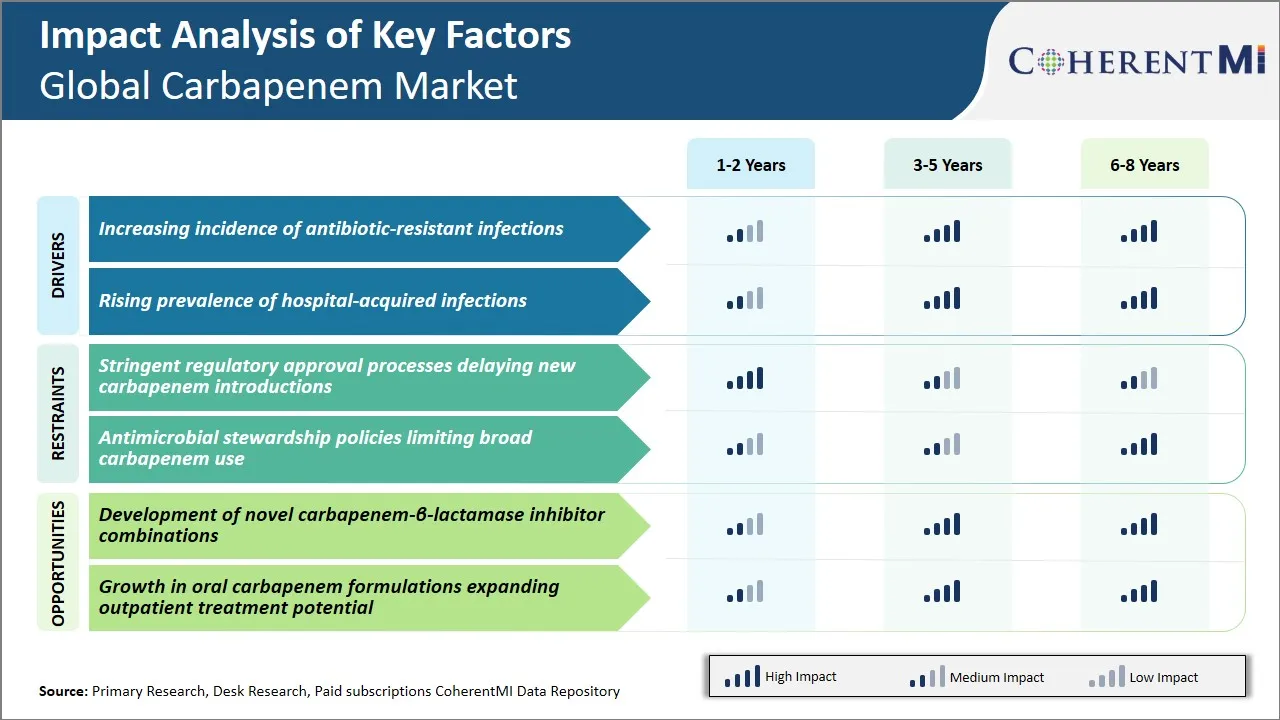
Market Driver - Increasing Incidence of Antibiotic-Resistant Infections
The escalating prevalence of antibiotic-resistant infections represents one of the most compelling forces driving the global carbapenem market forward, fundamentally reshaping the landscape of antimicrobial therapy and creating unprecedented demand for these critically important broad-spectrum antibiotics. The phenomenon of antimicrobial resistance has emerged as a multifaceted global health crisis that transcends geographical boundaries, affecting both developed and developing nations with equal severity and urgency. Healthcare systems worldwide are grappling with the mounting challenge of treating infections caused by multidrug-resistant organisms, including extended-spectrum beta-lactamase producing Enterobacteriaceae, carbapenem-resistant Acinetobacter baumannii, and methicillin-resistant Staphylococcus aureus, among others.
For instance, the WHO's October 2025 report reveals that antibiotic resistance is becoming a major global health threat, with one in six bacterial infections resistant to common antibiotics. Between 2018 and 2023, resistance increased in over 40% of monitored pathogen-antibiotic combinations. Gram-negative bacteria like E. coli and K. pneumoniae are particularly dangerous, with over 40% of E. coli and 55% of K. pneumoniae resistant to key antibiotics.
 To learn more about this report, Request Free Sample Copy
Market Driver - Rising Prevalence of Hospital-Acquired Infections
Hospital-acquired infections, also known as nosocomial infections, represent a formidable challenge to modern healthcare systems and constitute a primary driving force behind the expanding global carbapenem market, as these healthcare-associated infections frequently involve multidrug-resistant pathogens that require the most potent antimicrobial interventions available. The hospital environment creates unique conditions that foster the development and transmission of serious infections, with patients being particularly vulnerable due to compromised immune systems, invasive medical procedures, prolonged hospital stays, and exposure to antibiotic-resistant organisms that have become endemic in many healthcare facilities. The complexity of modern medical care, while offering unprecedented opportunities for healing and recovery, simultaneously creates multiple pathways for pathogenic bacteria to establish infections, ranging from central line-associated bloodstream infections and ventilator-associated pneumonia to surgical site infections and catheter-associated urinary tract infections.
Market Challenge - Stringent Regulatory Approval Processes Delaying New Carbapenem Introductions
The global carbapenem market faces significant headwinds due to increasingly stringent regulatory approval processes that substantially delay the introduction of new therapeutic options. Regulatory agencies, including the U.S. FDA, EMA, and other national authorities, have implemented more rigorous safety and efficacy requirements following concerns about antimicrobial resistance and patient safety. These enhanced protocols require extensive Phase III clinical trials with larger patient populations, longer follow-up periods, and more comprehensive safety databases, often extending development timelines by 2-3 years beyond traditional approval pathways. The complexity is further amplified by the need to demonstrate superiority or non-inferiority against existing carbapenem standards in treating severe infections, requiring sophisticated trial designs and substantial patient recruitment efforts.
Additionally, post-market surveillance requirements have become more demanding, necessitating robust pharmacovigilance systems and real-world evidence generation capabilities that smaller pharmaceutical companies may struggle to implement. The regulatory burden is particularly challenging given the relatively small market size for carbapenem antibiotics compared to other therapeutic areas, making it difficult to justify the substantial investment required for compliance.
Market Opportunity - Development of Novel Carbapenem‑β‑Lactamase Inhibitor Combinations
The development of innovative carbapenem‑β‑lactamase inhibitor combinations represents one of the most promising growth opportunities in the global carbapenem market, addressing the urgent clinical need for effective treatments against extensively drug-resistant bacterial infections. This strategic approach leverages the proven efficacy of carbapenem antibiotics while countering the primary resistance mechanism through novel β‑lactamase inhibitors, effectively extending the therapeutic utility of this critical antibiotic class.
Recent breakthrough combinations such as meropenem-vaborbactam and imipenem-cilastatin-relebactam have demonstrated remarkable success in treating carbapenem-resistant Enterobacteriaceae (CRE) infections, validating the commercial and clinical potential of this approach. The market opportunity is particularly compelling given the rising incidence of multidrug-resistant infections globally, with CRE infections alone affecting over 13,000 patients annually in the U.S., creating a substantial addressable market worth billions of dollars. Pharmaceutical companies are increasingly investing in next-generation β‑lactamase inhibitors that can neutralize a broader spectrum of resistance enzymes, including difficult-to-treat metallo-β-lactamases and serine carbapenemases.
Key winning strategies adopted by key players of Carbapenem Market
- Focus on Research & Development (R&D): Key players are heavily investing in R&D to develop novel carbapenem antibiotics that can combat resistant bacterial strains.
- Strategic Partnerships and Collaborations: Many companies are forming alliances with research institutions and other pharmaceutical companies to accelerate the development of new drugs.
- Geographic Expansion: Expanding market presence in emerging markets, particularly in Asia Pacific and Latin America, to address the growing demand for carbapenem antibiotics.
- Regulatory Approvals & Fast-Track Designations: Companies are leveraging fast-track regulatory pathways and priority review designations to expedite the approval process for new antibiotics.
- Product Differentiation: Differentiating products by improving efficacy, reducing side effects, and introducing oral formulations to make treatment more accessible.
- Acquisitions and Licensing: Acquiring or licensing promising drug candidates and technologies from smaller biotech firms to expand product portfolios.
- Strong Brand Positioning: Building strong brands and promoting the therapeutic benefits of carbapenem antibiotics through targeted marketing and awareness campaigns.
- Focus on Antibiotic Stewardship: Collaborating with healthcare providers to promote responsible antibiotic use and combat antimicrobial resistance (AMR).
Segmental Analysis of Carbapenem Market
 To learn more about this report, Request Free Sample Copy
Insights, By Product Type: Superior Antimicrobial Efficacy and Broad-Spectrum Coverage Drive Meropenem's Market Dominance
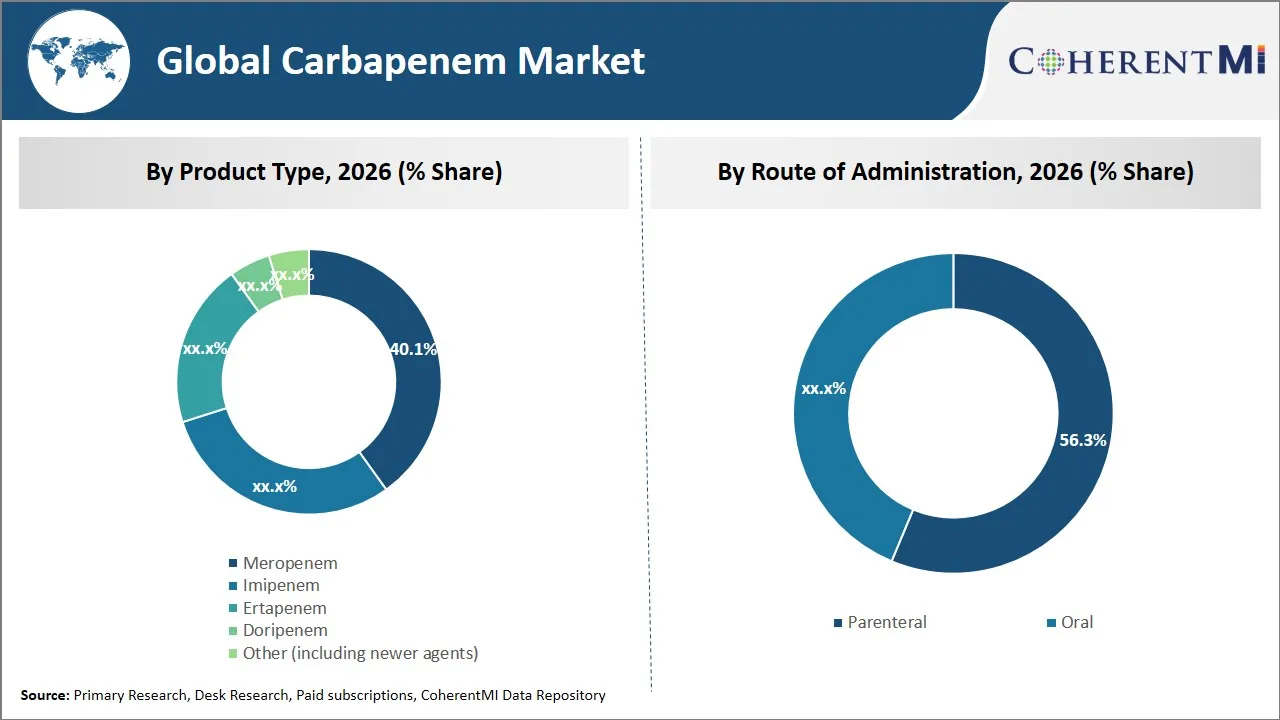
In terms of product type, meropenem is expected to contribute the highest market share of 40.1% share in 2026 owing to its exceptional antimicrobial properties and comprehensive pathogen coverage that makes it a preferred choice among healthcare professionals worldwide. Meropenem's molecular structure provides superior stability against beta-lactamases, including extended-spectrum beta-lactamases (ESBLs) and AmpC beta-lactamases, which are increasingly prevalent in hospital-acquired infections. This resistance to enzymatic degradation ensures consistent therapeutic efficacy even against multidrug-resistant organisms, positioning meropenem as a critical last-line defense in severe infections.
The drug's broad-spectrum activity encompasses both gram-positive and gram-negative bacteria, including anaerobic organisms, making it particularly valuable in empirical therapy settings where rapid treatment initiation is crucial. Healthcare providers rely heavily on meropenem for treating complicated intra-abdominal infections, pneumonia, meningitis, and sepsis, conditions that require immediate and reliable antimicrobial intervention. The ability to target multiple pathogen types with a single agent reduces the complexity of treatment regimens and improves patient compliance and outcomes.
Insights, By Route of Administration - Clinical Efficacy Requirements and Drug Stability Factors Establish Parenteral Route Supremacy
In terms of route of administration, parenteral segment is projected to contribute the highest market share of 56.3% in 2026 due to the inherent chemical instability of carbapenem molecules in acidic gastric environments and the critical nature of infections requiring carbapenem therapy. Carbapenems, including meropenem, imipenem, ertapenem, and doripenem, demonstrate significant degradation when exposed to gastric acid, resulting in substantially reduced bioavailability through oral administration. This chemical vulnerability necessitates parenteral delivery to ensure therapeutic drug concentrations reach target tissues and maintain antimicrobial efficacy against resistant pathogens.
The severity of infections typically treated with carbapenems demands rapid achievement of therapeutic blood levels that only parenteral administration can reliably provide. Patients presenting with sepsis, severe pneumonia, complicated urinary tract infections, or intra-abdominal infections require immediate antimicrobial intervention with predictable pharmacokinetic profiles. Parenteral administration eliminates variables associated with gastrointestinal absorption, including food interactions, gastric pH variations, and intestinal transit time, ensuring consistent drug delivery regardless of patient-specific factors that could compromise oral absorption.
Additional Insights of Carbapenem Market
- By product type, meropenem is expected to hold the largest market share at 40.1% in 2026.
- By route of administration, parenteral is projected to account for the highest market share at 56.3% in 2026.
- By end user, hospitals are anticipated to contribute the largest share of the market, with 45.3% in 2026.
- North America is expected to lead the market, holding a share of 39.4% in 2026. Asia Pacific is anticipated to be the fastest-growing region, with 24.5% share in 2026.
Competitive overview of Carbapenem Market
The major players operating in the global carbapenem market include Teva Pharmaceutical Industries Ltd, AstraZeneca plc, Meiji Holdings Co Ltd, Sandoz International GmbH, Sumitomo Dainippon Pharma Co Ltd, Shionogi and Co Ltd, Aurobindo Pharma Ltd, Acurx Pharmaceuticals LLC, Daewoong Pharmaceutical Co, and ACS Dobfar S.p.A.
Carbapenem Market Leaders
- Pfizer Inc
- Merck and Co Inc
- Fresenius Kabi LLC
- GlaxoSmithKline Plc
- Eli Lilly and Company
Recent Developments in Carbapenem Market
- In May 2025, GSK plc. and Spero Therapeutics announced the early halt of the PIVOT-PO phase III study for tebipenem HBr, an oral carbapenem for complicated urinary tract infections (cUTIs). The trial showed tebipenem HBr was non-inferior to intravenous imipenem-cilastatin. If approved, it could be the first oral carbapenem for cUTIs in the US. GSK plans to file for US FDA approval in H2 2025. The study involved 1,690 patients with no new safety concerns.
- In July 2025, Hoffmann-La Roche Ltd, pharmaceutical company announced it plans to launch a Phase 3 trial for its novel antibiotic zosurabalpin, aimed at treating carbapenem-resistant Acinetobacter baumannii (CRAB) infections. The trial, involving 400 patients across Europe, North and South America, and Asia, will compare zosurabalpin’s efficacy against standard antibiotics.
- In August 2023, GARDP has launched an observational study in India to analyze the management of carbapenem-resistant infections in hospitals. The study, conducted in collaboration with ICMR, involves 180 patients across six hospitals. It focuses on infections caused by carbapenem-resistant Enterobacterales (CRE) and Pseudomonas aeruginosa (CRPA). The goal is to improve treatment strategies and reduce related deaths.
Carbapenem Market Segmentation
- By Product Type
- Meropenem
- Imipenem
- Ertapenem
- Doripenem
- Other (including newer agents)
- By Route of Administration
- Parenteral
- Oral
- By End User
- Hospitals
- Outpatient Clinics
- Others (e.g., Home Care)
- By Application
- Bacterial Infections (e.g., pneumonia, urinary tract infections)
- Sepsis
- Intra-abdominal Infections
- Skin and Soft Tissue Infections
- Others (e.g., surgical prophylaxis)
- By Distribution Channel
- Hospital pharmacies
- Retail Pharmacies
- Online Pharmacies

Would you like to explore the option of buying individual sections of this report?
Ghanshyam Shrivastava - With over 20 years of experience in the management consulting and research, Ghanshyam Shrivastava serves as a Principal Consultant, bringing extensive expertise in biologics and biosimilars. His primary expertise lies in areas such as market entry and expansion strategy, competitive intelligence, and strategic transformation across diversified portfolio of various drugs used for different therapeutic category and APIs. He excels at identifying key challenges faced by clients and providing robust solutions to enhance their strategic decision-making capabilities. His comprehensive understanding of the market ensures valuable contributions to research reports and business decisions.
Ghanshyam is a sought-after speaker at industry conferences and contributes to various publications on pharma industry.