Licorice Candy Market SIZE AND SHARE ANALYSIS - GROWTH TRENDS AND FORECASTS (2026 - 2033)
Licorice Candy Market is segmented By Product Type (Original Black Licorice, Fruit Flavored Candy, A...
Licorice Candy Market Size - Analysis
The Global Licorice Candy Market is estimated to be valued at USD 1.67 Bn in 2026 and is expected to reach USD 2.11 Bn by 2033, exhibiting a compound annual growth rate (CAGR) of 3.4% from 2026 to 2033. This moderate yet consistent growth trajectory reflects the market's steady expansion driven by evolving consumer preferences and increasing awareness of licorice's distinctive flavor profile across diverse demographic segments globally.
Market Size in USD Bn
CAGR3.40%
| Study Period | 2026 - 2033 |
| Base Year of Estimation | 2025 |
| CAGR | 3.40% |
| Market Concentration | Medium |
| Major Players | The Hershey Company, Mondelez International, Inc., Yildiz Holding, Haribo GmbH & Co. KG, Candy People and Among Others |

please let us know !
Licorice Candy Market Trends
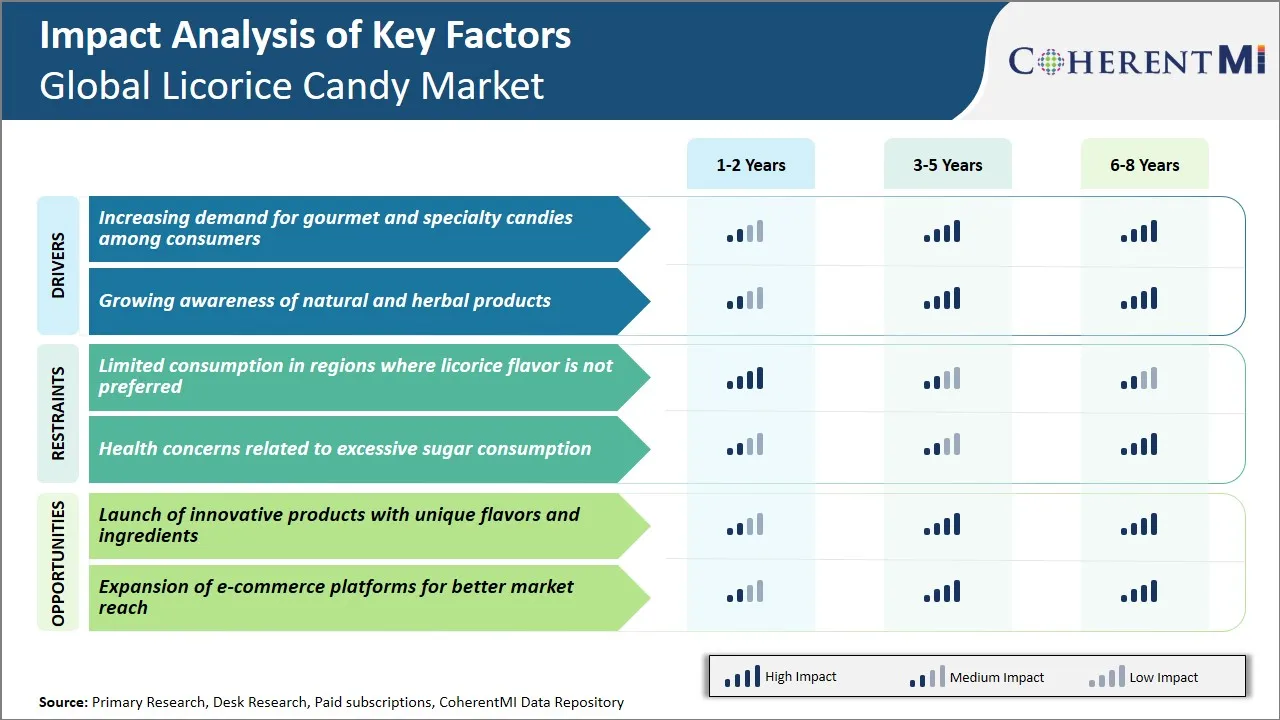
Market Driver - Increasing Demand for Gourmet and Specialty Candies Among Consumers
The market has experienced a striking shift with respect to the taste of consumers with a significant shift in preference to the upscale, crafty and even gourmet candy tastes. More than a mere trend, this shift is more of a paradigm change in the way consumers think and treat confectionary products, which makes licorice candy a beneficiary of this advanced palate maturity. Contemporary consumers are becoming more oriented toward viewing candy consumption as a kind of experience instead of a form of indulgence, and they are seeking products, which provide them with unique flavor characteristics, high quality ingredients, and quality manufacturing processes.
Having a unique taste of anise and centuries of culture that passes through European and Middle Eastern traditions, licorice fits this search of the refined and memorable taste experience just perfectly. The challenge of licorice flavor that can be both sweet and mellow and bold and intense is an attraction to those customers who have outgrown conventional sugar-based confection and sought more complex and challenging tastes.
 To learn more about this report, Request Free Sample Copy
Market Driver - Growing Awareness of Natural and Herbal Products
The revolution of wellness that is sweeping the globe has radically changed the consumer behavior towards the food and confectionary products and has generated unheard demand of products corresponding to the health conscious lifestyles and yet be able to offer enjoyment and satisfaction. This paradigm shift has placed licorice candy in a good position in the confectionery market with consumers becoming more aware and demanding to see products that have natural ingredients and are perceived to have health benefits.
The key flavoring component of the authentic licorice candy is licorice root, which has a long and rich history of medicinal and therapeutic application since the time of the ancient Egyptian civilizations through the contemporary Chinese medicine practices. The contemporary consumers with access to more information about the nature of ingredients and their characteristics have started to value licorice as not only as a flavoring ingredient but also as a botanical ingredient possessing the potential wellness properties.
The modern health-conscious consumer actively tries to find alternatives to synthetic ingredients and artificial additives and fuels the demand for the confectionery products that contain natural and plant-based elements. This trend is indicative of the wider consumer interest in processed foodstuffs and their health effects in the long term, which has brought about more attention to the ingredient list and towards products whose ingredients are familiar and pronounceable.
Market Challenge - Limited Consumption in Regions Where Licorice Flavor is not Preferred
The global licorice candy market has high penetration problems in those parts of the world where the characteristic anise-like taste is culturally alien or culturally detested by the consumers. The latter is especially acute in major growth markets in Asia Pacific, Latin America, and certain African regions, where the traditional confectionery tastes are inclined towards the fruity tastes, chocolate or regional-inspired ones.
Market research shows that licorice is one of the most divisive candy tastes in the world with approval ratings widely varying by the geographic area even as Northern European markets demonstrate consumption rates of over 40 percent among regular candy eaters, even compared with the rate of the Southeast Asian markets which are in the 8 to 12 percent range. This is a repulsion to a flavor that is culturally conditioned, as well as biologically determined, since the substance anethole that gives licorice its peculiar taste can be produced as a negative sensory stimulus by the people who have little past contact with it. It is also aggravated by the fact that there are well-established brands of local confectionery that dominate distribution channels and consumer mindshare in the areas and as such entry into the market would be too expensive and complicated to licorice candy manufactures.
Market Opportunity - Launch of Innovative Products with Unique Flavors and Ingredients
The licorice candy market in the world is significantly growing with the strategic product innovation that takes advantage of the flavor exploration as well as the premium ingredient positioning. The licorice candy market report indicates that consumers are seeking greater experiences in artisanal and exotic confectionery, and that millennial and Gen-Z populations are more willing to experiment with unorthodox food and flavor combinations. Such a trend leaves a lot of room in which licorice manufacturers will create hybrid formulations where they combine the traditional licorice extract with the globally popular flavors like salted caramel, tropical fruit, or spiced flavors with the addition of cardamom, ginger, or chili into the mix.
Key winning strategies adopted by key players of Licorice Candy Market
- Product Innovation: Companies are developing new flavors and healthier options (e.g., sugar-free, gluten-free) to attract a broader customer base. Malaco launched exotic flavors like mango and passion fruit in 2021.
- Market Expansion: Companies are expanding into growing markets like Asia Pacific. Ferrero Group strengthened its presence in China by expanding its Tic Tac licorice line.
- Sustainability Focus: Eco-friendly packaging and sustainable sourcing are becoming key. The Natural Candy Store switched to biodegradable packaging, while Haribo adopted greener production methods.
Segmental Analysis of Licorice Candy Market
 To learn more about this report, Request Free Sample Copy
Insights, By Product Type: Original Black Licorice Dominates due to Health & Ingredient Trends
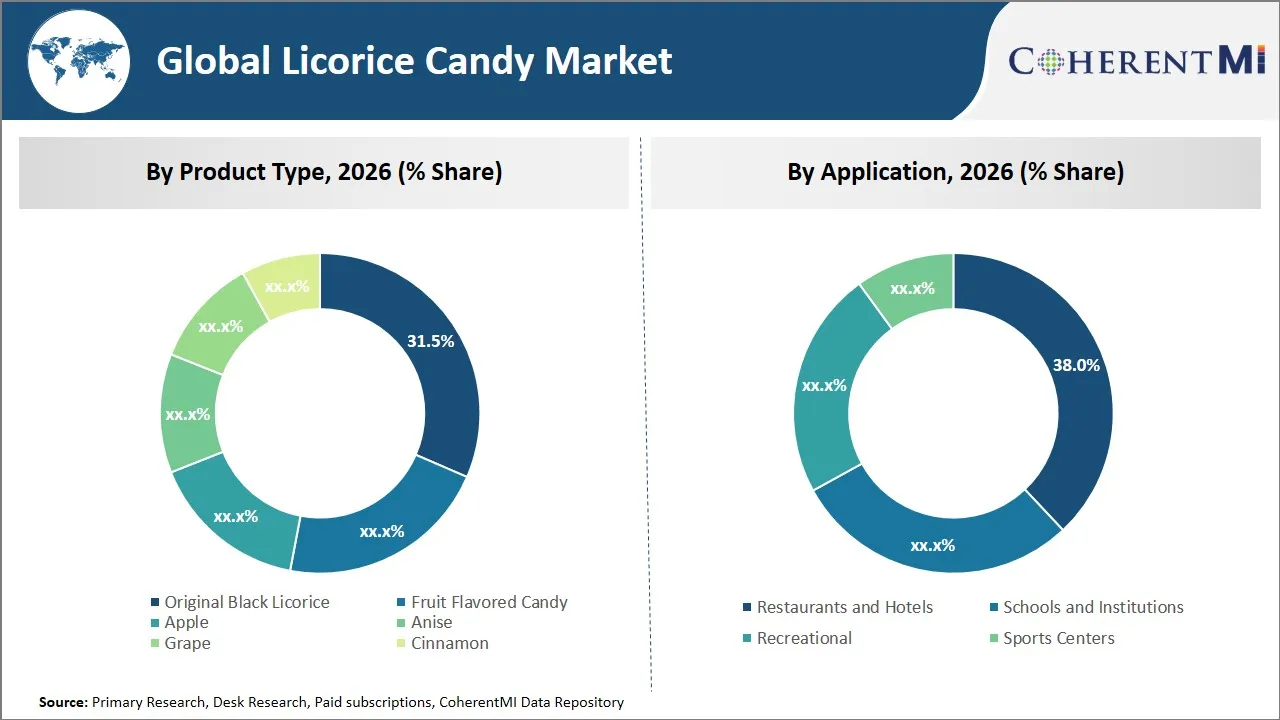
In terms of product type, the original black licorice segment is expected to contribute 31.5% share of the market in 2026, owing to its deep-rooted cultural significance and authentic flavor profile that resonates with traditional candy enthusiasts worldwide. Black licorice as the original variety has the advantage of history as the original type of candy licorice that has built a loyal customer base of consumers over several generations. This group is the most sensitive to nostalgic purchases when the buyers tend to pursue the experience of the authentic taste that links them to childhood memories and cultural heritage.
The characteristic anise kind flavor of original black licorice gives it a unique market positioning which helps distinguish it among other confectionary items. In contrast to all other artificial food flavor products, original black licorice has a complex, sophisticated flavor, which is attractive to all critical consumers who love true flavoring based on the licorice root extract. This is the authenticity element that triggers high-end positioning and buying willingness to pay more on quality products in this segment.
Insights, By Application: Foodservice Industry Expansion Fuels Restaurant and Hotel Market Leadership
The restaurants and hotels segment is projected to contribute 38% share of the market in 2026, owing to the expanding global hospitality industry and the strategic role of licorice candy as a unique offering in foodservice establishments. The prevalence of this application segment is an indicator of the increasing trend in the use of unique confectionery products by restaurants and hotels to improve customer experience and produce a memorable dining experience. Licorice candy is a great palate clearer and digestant and, so, is especially useful in fine restaurants where the flow of meals and the contentment of the guests are most important.
Increased dining experiences also create a demand for unique confectionary products, which distinguishes dining establishments among the competitors. Hotels and restaurants are finding a new use of licorice candy as an upscale substitute to traditional after-dinner mints or chocolate, and catering to the cosmopolitan diner who is mindful of a wide range of flavors. This differentiation enables hospitality outlets to demonstrate taste and culinary refinement besides offering their customers with unique taste experience that promotes total satisfaction and repeat patronage.
Channel & Price Tier Conversion Analytics (Retail vs D2C vs Online Marketplace)
|
Channel |
Low Price Tier |
Mid-Price Tier |
High Price Tier |
|
Retail |
30% |
50% |
20% |
|
Direct-to-Consumer (D2C) |
15% |
55% |
30% |
|
Online Marketplaces |
40% |
40% |
20% |
Additional Insights of Licorice Candy Market
- North America Dominance: The leading region in the licorice candy market, North America holds dominating share due to its very large customer base and the traditional use of licorice-based confections.
- Health-Conscious Consumers Driving Product Innovation: The healthier consumer profile has led to the creation of more licorice candies that are sugar-free, organic, and functional, which means manufacturers have to keep innovating and catering to these tastes.
- Licorice’s Potential Health Benefits: The growing demand for functional foods and drinks has also put licorice's health benefits, such as digestive health and anti-inflammatory properties, on the spot, and such benefits are being marketed.
Competitive overview of Licorice Candy Market
The major players operating in the Global Licorice Candy Market include The Hershey Company, Mondelez International, Inc., Yildiz Holding, Haribo GmbH & Co. KG, Candy People, Katjes Fassin GmbH & Co. KG, Taveners, Gustafs, Bakers Licorice, Australian Licorice Company, Brachs Confections, Trolli, and Black Licorice Company.
Licorice Candy Market Leaders
- The Hershey Company
- Mondelez International, Inc.
- Yildiz Holding
- Haribo GmbH & Co. KG
- Candy People
Recent Developments in Licorice Candy Market
- In September 2025, AMERICAN LICORICE COMPANY unveiled Spooktacular New Halloween Candy offerings from Sour Punch, Red Vines, and Torie & Howard brands. Fans of classic Sour Punch Straws will be treated to a whole new sweet and sour flavor experience with the launch of Sour Punch Frankenstraws, supercharged with fruity flavors like juicy Pear, mouthwatering Melon, and intriguing Midnight Mystery.
Licorice Candy Market Segmentation
- By Product Type
- Original Black Licorice
- Fruit Flavored Candy
- Apple
- Anise
- Grape
- Cinnamon
- By Application
- Restaurants and Hotels
- Schools and Institutions
- Recreational
- Sports Centers
- By Packaging
- Cans
- Jars
- Bottles

Would you like to explore the option of buying individual sections of this report?
Monica Shevgan has 9+ years of experience in market research and business consulting driving client-centric product delivery of the Information and Communication Technology (ICT) team, enhancing client experiences, and shaping business strategy for optimal outcomes. Passionate about client success.